

Did you know that millions of Americans unknowingly drink tap water with contaminants like chloroform, forever chemicals and microplastics?
Even if your water looks clear, it might not be as healthy as you think.
If you’re worried about the quality of your tap water and wanna ensure your family is drinking clean, safe water, choosing the right water treatment system is crucial.
But with so many options available, where do you start?
I’m Brian Campbell, a WQA Certified Water Specialist (CWS) and Certified Water Treatment Representative (CWR) and in this article, I’ll break down a simple, step-by-step process on how to choose a water filter for your home’s specific needs.
📌 How to Choose a Water Filter (Quick Guide)
- Identify your water source (city or well)
- Test your water to find contaminants
- Decide why you want filtration (health, taste, plumbing)
- Choose point-of-use vs whole-house systems
- Match contaminants to treatment technologies
- Check certifications, cost, maintenance, and flow rate requirements
1️⃣ Understand Your Water
First up, you’ve gotta understand your water and what it contains.
I wouldn’t buy medication to treat a health issue if I didn’t know exactly what that issue was.
The same applies to water filters – don’t just buy a random filter and hope it’ll remove the contaminants in your water without actually knowing whats in there.
This is the number one mistake I see people make all the time when buying a water filter.
Okay, so what can you do about it?
Determine Your Water Source
| Water Source | Common Contaminants | Health / Household Concerns |
|---|---|---|
| City Water | Chlorine, chloramine, lead, disinfection byproducts, pharmaceuticals | Taste/odor, cancer risk, developmental issues |
| Well Water | Nitrate, arsenic, iron, bacteria, sulfur | Blue baby syndrome, metallic taste, odor |
| Surface Water | Pesticides, PFAS, microplastics | Hormonal disruption, long-term health effects |
Start by asking yourself these questions:
First, ask yourself “do I have city water or well water?”
You probably already know the answer to this question.
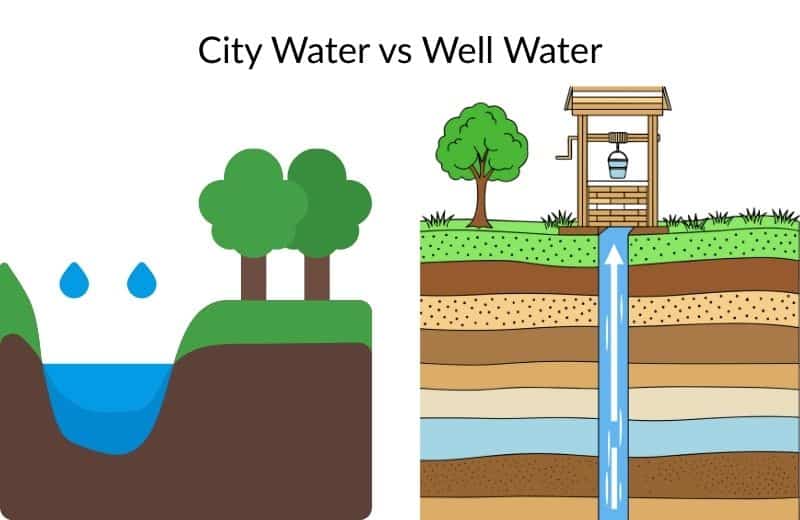
Most city water comes from a surface water source, like a river or reservoir, although there are a few exceptions, so be sure to check your water provider’s website if you’re not sure.
The reason why it’s important to differentiate here is that surface water quality is completely different from groundwater quality, and they typically contain different contaminants that need to be targeted with different treatment methods.
The EPA provides a good list of common well water contaminants and their sources, including things like microorganisms, nitrate and nitrite, heavy metals, organic chemicals, radionuclides, and fluoride.
In contrast, municipally treated water poses risk with a completely different set of contaminants, including lead, pharmaceuticals and disinfection byproducts.
Surface drinking water sources are also more likely to contain pesticides and other chemical contaminants due to runoff.
So you can see that there are certain contaminants in city water that are unlikely to be found in well water, and vice versa, which is why it’s so important to know exactly what type of water source you’re treating.
Find Out What’s in Your Water
And this brings us to the next question to ask yourself, “what’s actually in my water?”
Since most contaminants don’t have a taste or smell and can’t be seen with our eyes, you’ll need to do a bit more digging to get the answer here.
If you’re on city water, check out your most recent Consumer Confidence Report, which your water company is legally required to publish every year.
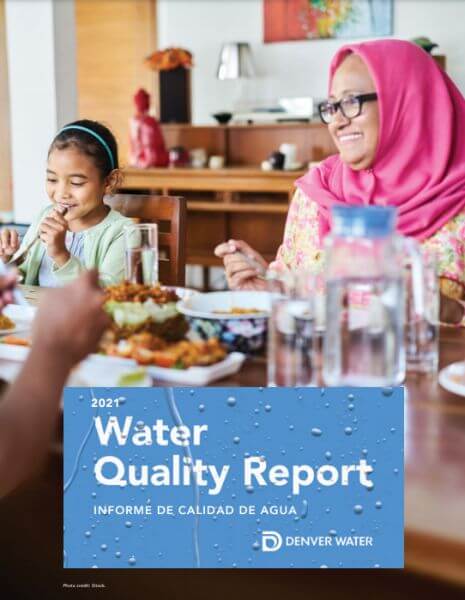
They’ll have it on their website, or you can find it with a quick Google search of your municipality followed by “Consumer Confidence Report” or “Water Quality Report”.
This will give you a list of contaminants that were detected in your water at the treatment plant, and additional parameters like hardness and pH.
The formatting of these reports does vary, but most will show you the EPA Maximum Contaminant Level and Maximum Contaminant Level Goal for each contaminant detected, so you can compare this with the actual concentration in your water.
CCRs are a good way to get a basic understanding of your water quality, but keep in mind that they’re not gonna tell you about contaminants that might appear in your water later on, like disinfection byproducts, or lead, which might leach from a service line in the water distribution system.
If you’re on well water, or you just want the most comprehensive understanding of your water quality, I strongly recommend getting your water tested by a certified lab.

There are a number of different labs out there, but I always encourage people to check out SimpleLab’s Tap Score product, because I’ve found it’s the most comprehensive, it’s super easy to use, and the reports are the most helpful and insightful.
You can choose to test for specific contaminants, but in this case, you want a broad overview of as many contaminants possible in your water, so I’d recommend one of Tap Score’s extended city or well water test kits.
These are gonna test for the most common contaminants in your water supply, and you can pick how comprehensive you want the test to be based on how much you wanna spend.
I personally think lab testing is well worth the investment because it gives you the full picture of your water quality at home.
And it’s essential if you’re on a private well because your water isn’t publicly treated, so you won’t have access to a consumer confidence report.
| Method | What You’ll Learn |
|---|---|
| Certified lab test | Comprehensive and precise panel of common contaminants in source water tested (well, city, pond, etc.) |
| Consumer Confidence Report (CCR) | National Primary Drinking Water Regulations (NPDWR) contaminants detected at the treatment plant and at select points in the distribution system |
| At-home test strips | Limited screening (not comprehensive nor precise) |
2️⃣ Determine Your “Why”
So that’s everything you need to know about your water quality.
Now it’s time to determine your “why”.

The goal here is to consider why exactly you wanna filter your water.
There could be a few reasons for this, and the most common I hear from folks are:
- My water tastes bad, and
- I’m worried about XYZ contaminant(s) with health effects
Your health is THE most important thing, so if you don’t wanna drink even trace amounts of contaminants with harmful health effects – even if the EPA says they’re safe in low concentrations – I don’t blame you at all.
You’re especially gonna wanna filter out the bad stuff if you have a weakened immune system, or are more at risk of getting sick from your water.
Lead, nitrate, arsenic, and disinfection byproducts are all extremely common in drinking water.
Once you know what your water contains, you can research the different contaminants and their health effects.
You’ll probably find your water contains at least one contaminant that makes you say, “heck no, I’m not putting that into my body, no way”.
And there’s your why.
Like I said, improving your water’s taste is another reason why you might wanna use a water filter, and this is totally understandable.
I personally hate the taste of chlorinated water, so I’m always gonna use an activated carbon filter at the very least to get rid of that chlorine taste and smell.
Groundwater can also taste pretty funky depending on the contaminants present.
Well water that has high iron content can have a metallic taste, and hydrogen sulfide causes that gross rotten egg-y smell.
Your why might also be related to what’s going on in your plumbing.
Especially if your water contains contaminants that stain or damage your fixtures and appliances, like hardness minerals, iron or manganese.
In this case, extending the life of your plumbing and appliances might be the priority.
Having a filtration system can also provide peace of mind in case of emergencies where clean water may be scarce.
There are so many reasons for using a water filter, and you might have more than one.
Whatever your why for filtering your water, it’s super helpful to have this clear in your head because it’ll help you in the next step.
3️⃣ Select Proper Treatment
Application
Now you wanna make sure you’re getting the right water treatment that solves your specific water quality issues and aligns with your “why”.
I always encourage people to start by looking at their specific application, or in other words what it’ll be used for.
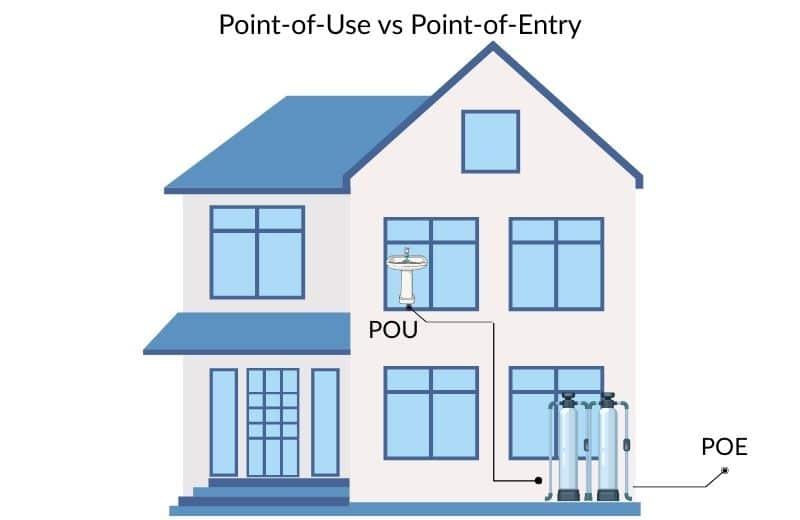
If you just wanna filter your drinking or cooking water, a point-of-use filter is your best bet.
Point of use means exactly what it sounds like – it filters your water at one specific location where it’s used, commonly at your kitchen sink.
But, going back to your why, if your water contains contaminants that could damage your plumbing, or you want filtered water throughout your entire home, you’ll benefit from a point-of-entry system.
Point of entry means the water is treated as it enters the home.
These are often more commonly referred to as whole-home filters or treatment systems.
This means all your faucets, fixtures, showers, and water-using appliances are only gonna be using filtered water, so they’re not getting stained or damaged by the contaminants targeted by the treatment system.
Another thing to consider here is your living situation.
Do you live in a house, or an apartment or condo?
This could affect your available space, especially if you’re thinking of installing a whole-house system.
And on a similar note, do you rent or own?
If you rent your home, some landlords may not allow permanent installations, which makes point-of-use systems typically more renter-friendly.
This is vital when determining how to choose a water filter pitcher or whole house system.
Treatment Technologies
So now you’ve got the application nailed down, and have your water test results, it’s time to explore treatment technologies.
Treatment technology is about the methods used to treat the water.
Common technologies include reverse osmosis separation, carbon adsorption, ion exchange water softening, and ultraviolet disinfection.
The right treatment technology for you is obviously gonna be different for everyone – There is no one-size-fits-all solution for water treatment.
It all depends on your specific water quality and your why, which is why I recommend getting those two things nailed down first before you get to this stage.
You can leverage the data to guide you in this decision, which will help you be confident that you’re buying the best water filter with the best technology for your situation.
Here’s how to use your water test results:
First, Identify your target contaminants: Look at the contaminants listed in your test report and prioritize the ones you’re most concerned about.
Second, Research treatment technologies: Find out which technologies are effective at removing your target contaminants.
And last, Choose a filter with appropriate testing or certification: Look for filters that have been tested and certified by independent organizations like NSF or WQA to ensure they effectively remove your target contaminants.
You may even need a combination of technologies to address all your concerns.
For example, if you have hard water and disinfection byproducts, you may choose a multi-stage system that combines water softening and activated carbon adsorption.
Start by addressing your most important concerns and add further treatment if needed.
Now that you understand treatment technologies and have a good idea of your needs, let’s explore the different water filtration system types and how to choose a water filter for your home.
Here are some of the most common options:
| System Type | Best For | What It Treats | Key Considerations |
|---|---|---|---|
| Pitchers & Gravity Systems | Renters, light use | Chlorine, taste, odor | Low cost, frequent filter changes |
| Countertop RO Systems | Apartments | PFAS, lead, nitrates | Takes counter space, needs power |
| Under-Sink Systems | Families | Wide range of contaminants | Installation required |
| Faucet-Mounted Filters | Temporary use | Chlorine, sediment | Limited compatibility |
| Refrigerator Filters | Convenience | Taste, chlorine | Not comprehensive |
| Shower & Bath Filters | Skin & hair | Chlorine, DBPs | Not for drinking |
| Whole-House Systems | Plumbing protection | Hardness, iron, chlorine | Higher cost, pro install |
- Countertop systems are a great choice for renters or those who want a simple and affordable solution.
- These include gravity-fed systems like pitchers, water distillers, and systems that use a pump like countertop ROs
- Under-sink systems often offer higher capacity and typically more stages of filtration than countertop systems.
- They’re a good choice for those who prioritize filtered water on-demand and don’t mind some installation.
- There are reverse osmosis systems that have a dedicated faucet, or direct-connect units that attach to the cold water line
- Faucet-mounted filters are super simple and easy to use if you have a compatible faucet
- And refrigerator filters of course provide cool, filtered water from your fridge
- Shower and bath filters primarily filter chlorine and disinfection byproducts from your bathing water
- And as I’ve already touched on, whole house systems treat all the water entering your home, providing treated water for every faucet, shower, and appliance.
- They’re ideal if you have water quality concerns throughout your house or if you simply want filtered water for everything.
- This includes systems like water softeners.
- However, they often require professional installation and are typically the most expensive option.
Important Considerations
Now that you’ve narrowed down your requirements based on your water quality and needs, let’s go over the most important considerations to think about when choosing a water treatment system.
| Factor | Why It Matters |
|---|---|
| Certifications | Confirms manufacturer performance claims & product material safety |
| Capacity & Lifespan | Affects replacement frequency and cost |
| Flow Rate | Prevents pressure drop |
| Materials & Build | Impacts durability and safety |
| System Size | Ensures it fits your space |
| Filter Changes | Determines maintenance effort & cost |
| Environmental Impact | Wastewater and backwashing considerations |
| Warranty & Guarantee | Protects your purchase |
| Total Cost | Upfront + long-term expenses |
| Installation | DIY vs professional |
| Smart Features | Convenience and monitoring |
Certifications
Certifications are the best proof a filter will work for your situation.
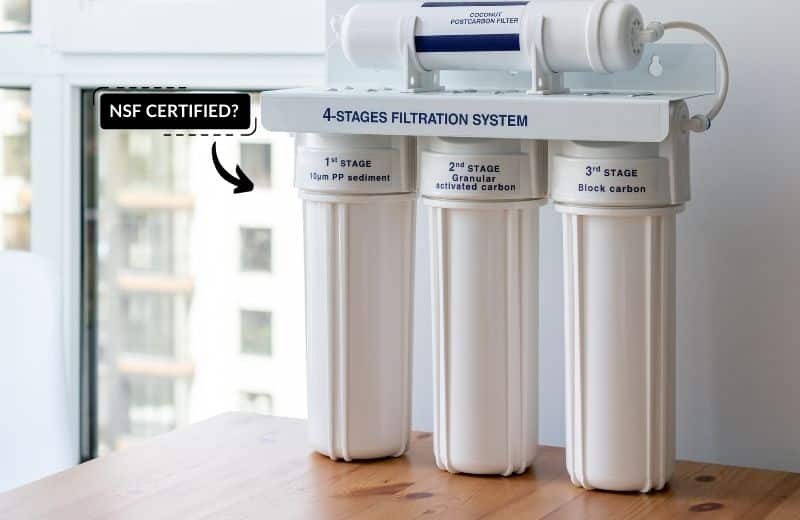
Manufacturers can get their filters certified to NSF/ANSI Standards for performance and materials safety.
Look for NSF, WQA, or IAMPO certification to ensure the system addresses the contaminants you care about.
Capacity/ Lifespan
Next look at the filter capacity or lifespan which can be found in the spec sheet.
Capacity refers to the volume of water a product can filter, whereas lifespan refers to the estimated length of time it will take to reach that capacity based on average conditions.
Filter lifespan will vary depending on the type of filter, water quality, and usage.
It’s good to consider your daily water usage and how capacity will affect the ongoing cost of replacement filters.
Flow Rate/ Daily Water Requirements
Flow rate is critical if you’re considering a point-of-entry system.
You’ll need to make sure your water pressure is sufficient even during times of peak usage, and that means installing a filter with an adequate flow rate for your daily water requirements.
Flow rate is less important for point-of-use filters that won’t potentially cause a drop in pressure throughout the entire home.
But it can still be a useful metric to consider because it tells you how quickly you’ll have access to filtered water.
Materials and Design Quality
You might have specific preferences for different materials used in a filter system.
For instance, some folks might wanna avoid plastic in preference of stainless steel or glass.
Materials safety, quality and durability are paramount when looking at what the system itself is made from.
Since design quality isn’t something you can deduce from images and product descriptions alone, it’s a good idea to look up reviews from folks who have actual first-hand experience using a filter.
Design quality is a factor we discuss in detail when we’re reviewing water filters, and we’ll tell you exactly what we think about the sturdiness of a system based on our own hands-on testing.
System Footprint
Next, double-check the system’s dimensions to ensure it fits comfortably in your designated space.
This is important to mention because it’s such an easy one to accidentally overlook, which can help eliminate the hassle of returning a system and requesting a refund.
And along these same lines and going back to your ‘why’, if counter space is limited or you want the flexibility to move your filter, consider the portability of the system.
Filter Changes
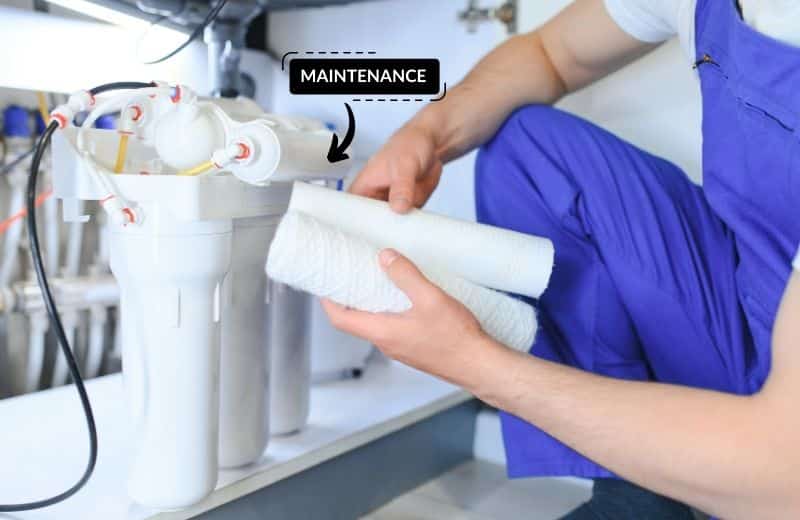
Regardless of the system you buy, it’s most likely gonna require some maintenance like changing the filters.
The type of system you decide on will determine how many filters you need to replace, and how often.
Again, you’re not gonna know how easy or difficult it is to replace the filters unless you read reviews from folks who have actually done this themselves.
It’s also good to look into the availability of the replacement filters the system requires, because a great filter with hard-to-find replacements can be frustrating in the long run.
Environmental Impact
So you’ll also wanna consider the environmental impact of the systems you’ve identified.
Some technologies produce waste water as an unavoidable part of the treatment process.
For example, reverse osmosis systems will have reject water with concentrated contaminants, while some whole-home filters and ion exchange water softeners need to backwash to refresh their media.
Guarantee & Warranty
We always like to look at the warranty and any guarantees a manufacturer offers.
Chances are, you’re not gonna need to use them, but you never know – you don’t wanna end up with a defective product only to find that you can’t return it because there’s no warranty.
Warranty length typically varies based on system type, with cheaper filters like pitchers averaging 30 days while whole-home systems are often covered for at least a year.
Also, I personally only consider buying a water filter if it has some form of money-back guarantee.
If you follow the steps in this article, you should end up with a water filter that ticks all your boxes, but just because it’s right on paper, doesn’t mean that it’ll definitely meet your expectations once you’ve started using it.
Now if the manufacturer offers a guarantee, no problem.
You can return it for a full or partial refund.
I’ll add here that it’s super important to carefully read the terms of any warranty or guarantee and look for any stipulations.
Some manufacturers require their customers to pay the return shipping or a restocking fee, for example.
Cost Considerations
Your budget is of course also going to determine the system you buy, but don’t only think about how much you can afford to spend upfront.
For systems that require a complicated install, you might also need to pay for a professional installation, which could add another couple hundred dollars onto your initial bill.
Then there are the ongoing maintenance costs, which vary depending on the system type and technology.
Something super interesting I learned from my own testing is that the cheapest systems to buy upfront are rarely the cheapest to maintain long-term.
For example, the Culligan ZeroWater pitcher costs less than $50, but I calculated its ongoing maintenance cost averaging 90 cents per gallon.
Now if we compare it to the RKIN U1, this reverse osmosis system costs $750 upfront, which is over 18 times the price of the ZeroWater pitcher.
But, its ongoing maintenance cost is less than 10 cents per gallon, making it over 8 times cheaper to maintain.
You might still prefer to buy the pitcher, but I just wanted to highlight the importance of considering the ongoing costs as well when trying to make a budget-conscious decision.
Installation Considerations
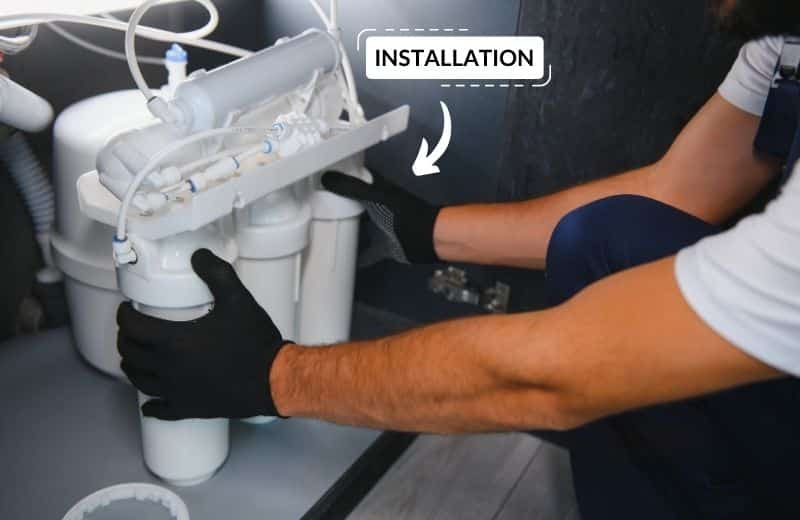
I mentioned this a minute ago, but if you’re buying a system that’s complicated to install, you might wanna get a professional to do it for you.
It might be worth the extra cost to avoid a potentially expensive mistake.
I generally say that point-of-use systems are pretty DIY-friendly, but this depends on the system type.
For instance, some folks may prefer to hire a professional to install an under-sink reverse osmosis system which are a bit more complex.
My advice is to read through the user manual before you buy the system, because it’ll help you to determine how difficult the install will be, and if there are any specific requirements like electrical connections or drain lines.
Smart Features
Finally, while not essential for everyone, some advanced systems offer smart features like filter change reminders, app connectivity and automatic leak prevention.
Think about if these features would be valuable to you and if you’d be willing to pay a premium for them.
Hello Brian,
I am looking for a whole house filter for a home in Tucson, AZ. We are on a municipal system. Yes, I want the health benefits of clean water AND I need a solution to address the incredibly HARD water down here for asthetic purposes and extending life of appliances that use water.
EWS – Environmental Water Solutions is out of Las Vegas. They too have hard water to deal with…. I cannot find information/research you have on their products.
I can see that your choices for whole house include the Spring Well CF.
Can you compare and contrast the two systems?
Thanks!
Hello,
Thanks for reaching out. I’m mainly focused on testing products that are available nationally, and my guess is that Environmental Water Solutions is more of a local company or dealer that sells a narrower product line. Because of that, I haven’t investigated or tested any of their products directly, so I can’t give you a data-backed comparison of EWS versus SpringWell specifically.
More broadly, it’s important to separate the two issues you’re trying to solve, because they usually require different treatment. A whole house water filter and a water softener are not the same thing. A whole house filter is typically used to reduce things like chlorine, disinfection byproducts, PFAS, and other organic contaminants. Hardness is a different issue, and if you want to properly address very hard water for aesthetic reasons and to help protect plumbing and water-using appliances, you’ll need a cation exchange water softener.
So in your case, a system like the SpringWell CF could make sense if your goal is improving municipally treated water by reducing chlorine, DBPs and similar contaminants throughout the home. But it will not soften the water or prevent scale from hard water. For that, you would want to pair a whole house filter with a properly sized softener, or prioritize a softener first if hardness is the main pain point.