

Thanks to social media, shower filters are receiving a whole lot of attention from folks who want to protect their skin and hair from common contaminants. In the past year or so, a handful of new brands have popped up, some using aggressive marketing tactics in an effort to convince you that their shower filters are the very best on the market. Two of the manufacturers currently competing for the limelight are Filterbaby and eskiin.
It’s far too easy for manufacturers to make exaggerated or false claims about a product in the US. That means brands like Filterbaby and eskiin are guilty of spreading misinformation, or making their products sound better than they actually are, and their customers are none the wiser.
That’s why Water Filter Guru exists. We test and review filters ourselves using our data-driven scoring system, then compare our findings to the manufacturer’s claims. In this review, we’re putting Filterbaby vs eskiin head to head, comparing their contaminant reduction performance, design quality, flow rate, and more, to see which shower filter (if any) is worth your money.
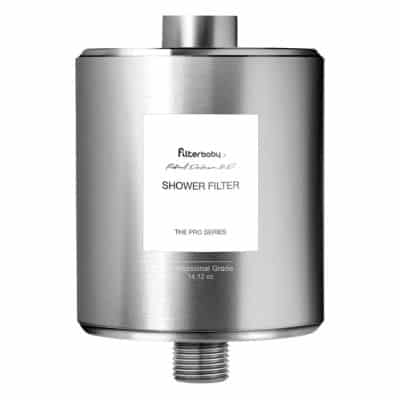
Filterbaby
Best For:
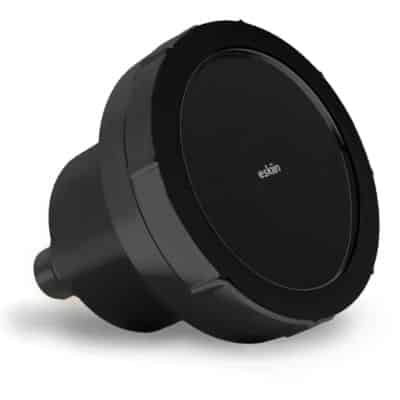
Eskiin
Best For:
Quick Verdict: Filterbaby or eskiin?
Filterbaby, but only because it is the one that reduced chlorine. The Filterbaby Pro scored 7.71 out of 10 in our testing and the eskiin Shower Head Filter scored 7.29. The gap comes down to one number: Filterbaby cut chlorine from 1.68 PPM to 0.23 PPM (86%) while eskiin cut none (1.68 PPM to 1.79 PPM). Neither filter reduced disinfection byproducts or hardness, neither holds an NSF/ANSI 177 certification, and neither made our list of the best shower filters.
Choose Filterbaby if: you want measurable chlorine reduction and a solid metal inline housing that works with your existing showerhead.
Choose eskiin if: you only want an attractive all-in-one showerhead with strong flow (1.74 GPM), cheaper cartridges ($0.025 per gallon), and a 60-day return window, and contaminant reduction is not your goal.
Skip both if: you want a shower filter that reduces DBPs or hardness. Neither did in our testing. The Weddell Duo (9.19) is the only shower filter we have tested that removed 100% of chlorine and 100% of DBPs.
Scores come from our shower filter testing methodology, which weights contaminant reduction at 55% of the overall score.
📊 Our Testing Data
Our water filter testing data spans 6 main assessment criteria. To see how Filterbaby and eskiin match up across these key performance categories, review their scores in the table below.
| Factor | Filterbaby | Eskiin |
|---|---|---|
| Contaminant Reduction | 6.63 | 6.00 |
| Filtration Rate | 10.00 | 10.00 |
| Design | 8.10 | 7.20 |
| Setup | 9.00 | 9.00 |
| Maintenance | 9.50 | 9.50 |
| Company | 8.00 | 8.35 |
Our category scores are calculated by combining the scores awarded in our subcategory testing. The next table breaks down all the data from each test we conducted.
| Factor | Filterbaby | eskiin | Winner |
|---|---|---|---|
| Overall Score | 7.71 | 7.29 | Filterbaby |
| DBPs | 6.00 | 6.00 | Tie |
| Disinfectant Residual | 8.00 | 6.00 | Filterbaby |
| Hardness | 6.00 | 6.00 | Tie |
| Performance Certification | Not Certified | Not Certified | Tie |
| Filtration Rate | 1.63 GPM | 1.74 GPM | eskiin |
| Component Quality | Outstanding | Fair | Filterbaby |
| Component Certification | Not Certified | Not Certified | Tie |
| Setup | Excellent | Excellent | Tie |
| Servicing Requirements | Excellent | Excellent | Tie |
| Costs | $0.034/ gal | $0.025/ gal | eskiin |
| Warranty Length | 90 days (lifetime with filter subscription) | None | Filterbaby |
| Shipping | Free shipping for the contiguous US | Free shipping for the contiguous US | Tie |
| Returns | 30 days | 60 days | eskiin |
🚰 Contaminant Reduction
Key Finding: Filterbaby reduced chlorine by 86% (1.68 PPM to 0.23 PPM) while eskiin reduced none (1.68 PPM to 1.79 PPM), and neither filter reduced disinfection byproducts or hardness, which is why Filterbaby scored 6.63 and eskiin 6.00 in this category.
If you’ve come across eskiin and Filterbaby on social media, you’ve probably been sucked into influencer marketing for both.
Filterbaby has been called “the #1 most powerful, efficacious shower filter” on Facebook, while a TikTok influencer said that their “hair and skin have never been better” after installing the eskiin filter.
Keep in mind that the influencers praising these brands almost always receive some form of commission for doing so. Their opinions usually come from limited personal experience, and most don’t subject filters to any form of testing themselves, as we do. That means you’re not getting an unbiased insight into how the filter performs from a customer’s perspective.
Misinformation online is one of the key reasons why we conduct our own contaminant reduction testing. To compare Filterbaby and eskiin in this category, we used lab testing and on-site analysis to compare problematic shower contaminants before and after filtration.
| Analyte | Unit | Unfiltered | Filterbaby | Filterbaby Change | Eskiin | Eskiin Change |
|---|---|---|---|---|---|---|
| Total THMs | ppb | 15.03 | 32.42 | +115.7% | 18.46 | +22.8% |
| Chloroform | ppb | ND (<2) | 20.6 | n/a | ND (<2) | n/a |
| Bromodichloromethane | ppb | 2.12 | 8.32 | +292.5% | 2.65 | +25.0% |
| Dibromochloromethane | ppb | 4.67 | 3.5 | -25.1% | 6.7 | +43.5% |
| Bromoform | ppb | 8.24 | ND (<2) | -100% | 9.1 | +10.4% |
| Aluminum | ppm | ND (<0.05) | ND (<0.05) | n/a | 0.0621 | n/a |
| Barium | ppm | 0.0337 | 0.031 | -8.0% | 0.0324 | -3.9% |
| Boron | ppm | 0.438 | 0.405 | -7.5% | 0.449 | +2.5% |
| Chromium (Total) | ppm | 0.00368 | 0.00385 | +4.6% | 0.00477 | +29.6% |
| Copper | ppm | 0.274 | 0.0465 | -83.0% | 0.276 | +0.7% |
| Manganese | ppm | 0.0011 | ND | -100% | ND | -100% |
| Molybdenum | ppm | 0.00127 | 0.00126 | -0.8% | 0.00137 | +7.9% |
| Selenium | ppm | 0.00428 | 0.00352 | -17.8% | 0.0041 | -4.2% |
| Strontium | ppm | 0.739 | 0.738 | -0.1% | 0.75 | +1.5% |
| Uranium | ppm | 0.0124 | 0.0122 | -1.6% | 0.0115 | -7.3% |
| Vanadium | ppm | 0.0015 | 0.00143 | -4.7% | 0.00178 | +18.7% |
| Hardness (as CaCO3) | ppm | 249 | 250 | +0.4% | 259 | +4.0% |
| Hardness | gpg | 14.62 | 14.67 | +0.3% | 15.2 | +4.0% |
| Calcium | ppm | 74 | 74.5 | +0.7% | 76.7 | +3.6% |
| Magnesium | ppm | 15.6 | 15.6 | 0.0% | 16.3 | +4.5% |
| Sodium | ppm | 178 | 179 | +0.6% | 181 | +1.7% |
| Potassium | ppm | 2.93 | 3.01 | +2.7% | 2.98 | +1.7% |
| pH | pH units | 7.9 | 8.0 | +0.1 | 7.9 | 0.0 |
| Alkalinity (as CaCO3) | ppm | 379 | 375 | -1.1% | 373 | -1.6% |
| Bicarbonate | ppm | 458.64 | 452.92 | -1.2% | 451.38 | -1.6% |
| Carbonate | ppm | 1.68 | 2.09 | +24.4% | 1.65 | -1.8% |
| Chloride | ppm | 92.8 | 98.3 | +5.9% | 97 | +4.5% |
| Sulfate | ppm | 145 | 147 | +1.4% | 152 | +4.8% |
| Fluoride | ppm | 1.7 | 1.6 | -5.9% | 1.8 | +5.9% |
| Nitrate (as N) | ppm | 3 | 2.8 | -6.7% | 3.2 | +6.7% |
| Total Dissolved Solids | ppm | 756 | 765 | +1.2% | 773 | +2.2% |
| Specific Conductivity | µmhos/cm | 1300 | 1310 | +0.8% | 1330 | +2.3% |
| Langelier Saturation Index | index | 0.67 | 0.77 | +0.10 | 0.68 | +0.01 |
| Chloride-to-Sulfate Mass Ratio | ratio | 0.64 | 0.67 | +0.03 | 0.64 | 0.00 |
| Sodium Adsorption Ratio | ratio | 4.9 | 4.92 | +0.02 | 4.89 | -0.01 |
The contaminants we specifically focused on were:
- Disinfection byproducts (DBPs), which are present through shower vapor and dermal (skin) contact
- Disinfection residual (chlorine, chloramine, etc.), which can have dermal effects
- Water hardness, which affects both hair and skin
Learn more about how we score shower filters here.
We also looked at online certification databases to see if any of the systems had been certified for their contaminant reduction performance.
Our Test Results
Below, we’re discussing our water quality test data for Filterbaby and eskiin.
DBPs
Starting with the most concerning contaminant in shower water, we used Tap Score lab data to see if Filterbaby and eskiin could remove the disinfection byproducts (DBPs) detected in our baseline sample.
These contaminants are rarely mentioned by shower filter manufacturers, which is an oversight, as they have serious known health effects when inhaled in water vapor, including increased cancer risk.
While they don’t have noticeable skin and hair effects, they’ve been linked to much more serious health issues. That’s why DBP reduction has the biggest influence on our contaminant reduction scoring.
To test for DBPs, we collected two samples of water:
- An unfiltered baseline sample
- A sample of filtered water from each showerhead
Our assessment and scoring was based on whether Filterbaby or eskiin could reduce the detected DBPs to below the Health Guideline Level (or to undetectable levels).
Filterbaby
In our Filterbaby tests, 3 DBPs were identified in our unfiltered shower water:
- 8.24 PPB (parts per billion) bromoform
- 2.12 PPB bromodichloromethane
- 4.67 PPB dibromochloromethane
In our filtered water, bromoform was no longer detected, suggesting a 100% decrease. But bromodichloromethane increased by 292%, to 8.32 PPB, and dibromochloromethane decreased by just 25%, to 3.5 PPB.
It’s unlikely that the Filterbaby Pro would reduce one DBP and increase another. Most likely, all the results in this test were caused by fluctuations in our source water, rather than the filter itself.
Why? Because DBPs are highly volatile. That means their concentrations can vary significantly across samples taken at different times. If the Filterbaby Pro was actually capable of reducing DBPs, we’d see reductions across the board, not just some but not others.
eskiin
When we tested eskiin, 3 DBPs were detected in our baseline sample:
- 8.24 PPB of bromoform
- 2.12 PPB of bromodichloromethane
- 4.67 PPB of dibromochloromethane
eskiin was unable to reduce any of these contaminants. Actually, their concentrations all increased slightly post-filtration, probably due to an incidental increase in these DBPs between our two tests.
Disinfectant Residual
Municipal drinking water in the US is usually disinfected with regulated concentrations of chlorine. While chlorinated water is considered safe to ingest and shower in, it can have skin and hair effects through dermal contact, especially for folks with sensitive skin or existing conditions like eczema.
We conducted both tests in a home that receives chlorinated water, using a digital colorimeter to take chlorine readings on-site. This helped us avoid receiving a “false low” reading at the lab due to chlorine’s volatility (it would dissipate from our sample during shipping).
Filterbaby
When we tested the Filterbaby Pro, our baseline water sample contained 1.68 PPM of chlorine. We then installed the filter and retested the water leaving the showerhead. In this test, the reading dropped to 0.23 PPM, which works out to a reduction of just over 86%.
A significant chlorine reduction is reassuring, but we’d expect to see complete chlorine removal from Filterbaby. Chlorine is one of the simplest contaminants to remove, so it’s concerning that Filterbaby, which is primarily marketed for chlorine reduction, can’t even get this right.
eskiin
In our eskiin tests, 1.68 PPM of chlorine was detected in our baseline sample. When we conducted the same test with filtered water, 1.79 PPM of chlorine was detected: a 6.55% increase (most likely incidental).
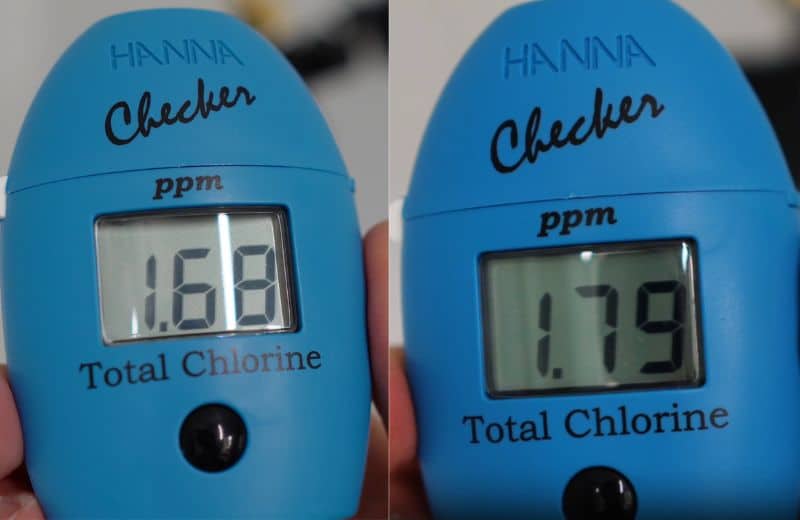
That’s an extremely disappointing result. Chlorine wasn’t reduced even slightly, which begs the question: what exactly are you buying eskiin for?
Hardness
Hardness minerals, particularly calcium and magnesium, can have skin and hair effects in shower water.
We used lab data from our Tap Score tests to evaluate Filterbaby and eskiin’s hardness reduction performance.
Filterbaby
When we tested the Filterbaby Pro, our baseline sample was very hard, measuring 249 PPM of total hardness as CaCO3.
After filtration, it was almost exactly the same. The lab detected 250 PPM of total hardness, which tells us that Filterbaby is unable to reduce hardness minerals.
Most shower filters are unable to address water hardness, although many, like Filterbaby, deceptively claim that they can.
eskiin
Our baseline sample contained 249 PPM of total hardness when testing the eskiin filter.
And our post-filtration results were similar, too: hardness increased by 4%, to 259 PPM. This small change was likely an incidental fluctuation in hardness levels between our two tests.
Certifications
To provide official third-party evidence of chlorine reduction, shower filter manufacturers can apply to get their products certified by the NSF, WQA, or IAPMO to NSF Standard 177.
The Filterbaby and eskiin shower filters haven’t been certified.
Filterbaby’s Amazon product listing currently claims that it’s “IAPMO Certified to NSF 177 Standard”, which we were unable to verify in the official IAPMO certification database.
The eskiin Shower Filter also isn’t currently certified, but at least the manufacturer doesn’t claim that it is.
🚦Filtration Rate
Key Finding: Both filters scored a perfect 10.00 for filtration rate, with Filterbaby delivering 1.63 GPM (94% of baseline flow) and eskiin 1.74 GPM at 48 PSI feed pressure.
Since shower filters slow down the flow of water as it passes through the filtration media, we measure flow rate as part of our testing.
To do this, we measured the “normal” flow rate from our existing, non-filtering showerhead, then repeated testing for the Filterbaby Pro and eskiin Shower Filter. This involved timing the process of filling a graduated measuring cup to the 1-gallon mark, with these measurements then converted into a GPM (gallons per minute) reading.
The table below highlights each filter’s filtration times and flow rates.
| Product | Filtration Rate Score | Filtration Rate |
|---|---|---|
| Filterbaby | 10.00 | 1.63 GPM |
| eskiin | 10.00 | 1.74 GPM |
With a feed water pressure of 48 PSI and a temperature of 61.7°F, the Filterbaby Pro delivered an average filtration rate of 1.63 GPM, retaining 94% of our baseline flow.
In our eskiin test, with the same water pressure and a temperature of 62°F, the filter’s average flow rate was 1.74 GPM, retaining over 100% of our baseline flow (we actually recorded a slightly faster flow rate after installing the filter).
From a practical perspective, both of these results are great. But does this lack of a difference between flow rates impact performance? Possibly.
Particularly when we look at eskiin, our water flow was slightly faster after installing the filter. That leads us to question whether water is having enough contact time for the filter to effectively remove contaminants.
Generally, the more contact time with the media, the more thoroughly and effectively contaminants can be removed. But it looks like water is passing straight through the eskiin filter with no resistance whatsoever, which could explain why it was unable to reduce even chlorine at all.
💲 Upfront Cost
Key Finding: At $139 for Filterbaby and $149 for eskiin, both cost more than shower filters that outperformed them in our testing, and neither offers a performance benefit that justifies the premium.
Filterbaby and eskiin are up to 5x more expensive than some of the other shower filters we’ve tested:
- The Filterbaby Pro costs around $139
- eskiin is $149 at list price (the manufacturer discounts it often)
These high price tags are obviously part of the impression the manufacturers are trying to create of a premium product.
But when we look at their performances, nothing makes them any better than shower filters that cost less than $70 upfront. In fact, many of the more affordable shower filters we’ve tested actually offered a better performance.
📐 Design
Key Finding: Filterbaby’s solid metal housing earned a component quality score of 9.50, the joint-highest we have awarded to any shower filter, while eskiin’s mostly plastic build scored 8.00, and neither holds a materials safety certification.
One of the biggest differences between Filterbaby and eskiin is their design:
| Product | Design Score | Component Quality | Materials Safety |
|---|---|---|---|
| Filterbaby | 8.10 | Outstanding | Unsatisfactory |
| eskiin | 7.20 | Fair | Unsatisfactory |
eskiin is an all-in-one filter and showerhead, so you swap it out for your existing showerhead.
Filterbaby is an inline filter, which means you attach it to your shower arm upstream of your existing showerhead.
While we haven’t noted any performance differences between inline and all-in-one showerheads, we know some folks may prefer to hide their filters inside a dedicated showerhead, while others might want to still be able to use their own showerheads.
Here, we’re comparing Filterbaby and eskiin for their build quality, filter materials, and whether they have official certifications for materials safety.
The table below shows how each filter compares.
Appearance & Finish Options
If you care about aesthetics and don’t want a shower filter that’ll look out of place in a modern bathroom, both Filterbaby and eskiin should appeal to you. They’re modern and attractive, with several finish options for different tastes and bathroom designs.
The Filterbaby Pro is available in three finishes:
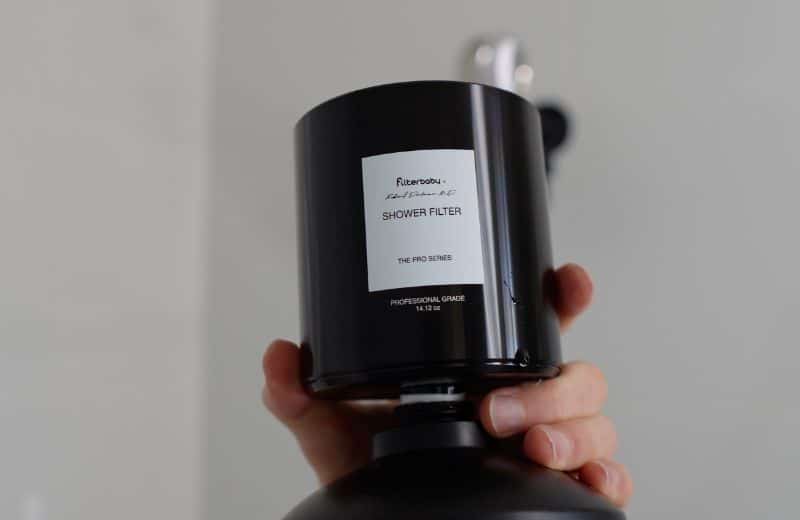
- Chrome
- Black
- Gold
eskiin is also available in three finish options:
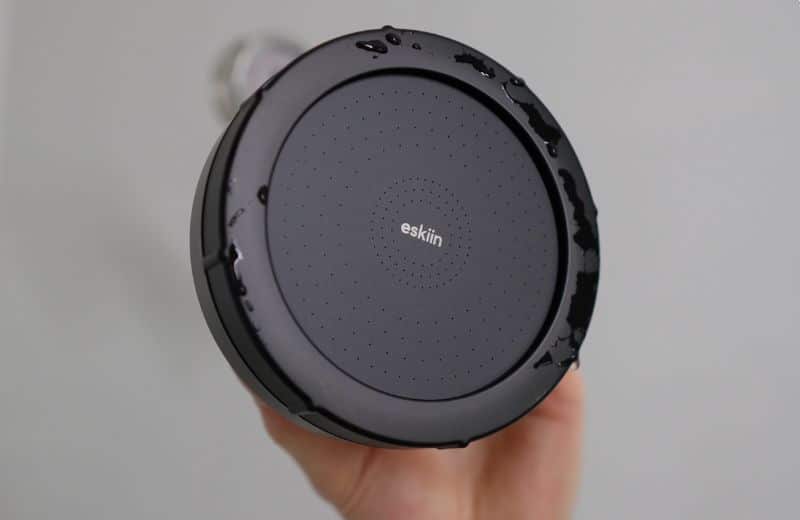
- Chrome
- Black
- Brushed nickel
Design Quality
Filterbaby has a distinct design quality advantage compared to eskiin: it’s one of the few shower filters we’ve tested to have a solid metal design (rather than just plastic with a chrome overlay). It feels durable, and the filter cartridge itself is clearly unique to the manufacturer.
eskiin, meanwhile, has a mostly plastic design that feels cheap and flimsy. We also found what we initially thought was a bug or seed in the cartridge, but thankfully, it was just a small piece of rubber.
Ultimately, design is one of the only things that Filterbaby gets right, while eskiin was just as disappointing as the other shower filters in the “heavily marketed, unjustifiably expensive” category.
Filter Materials
Both manufacturers use different filtration media in their shower filters:
- Filterbaby uses an external pleated microfilter and an activated carbon internal media.
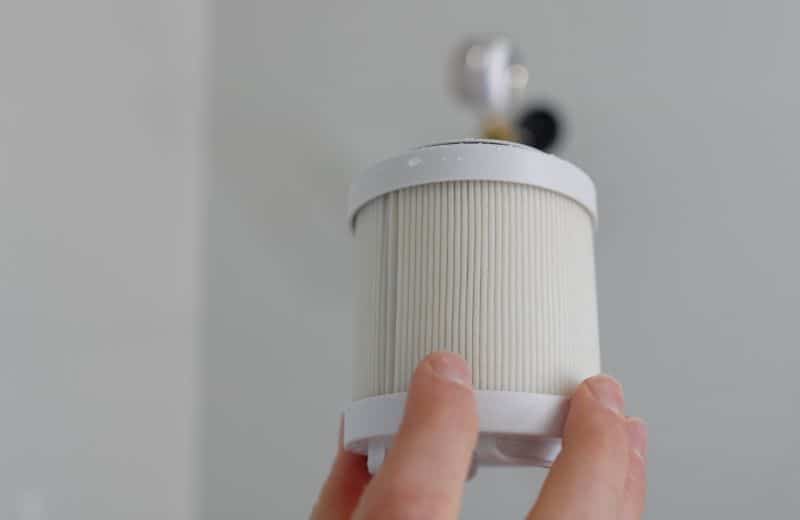
- eskiin uses “15 layers” of filter media: high-density stainless steel mesh, PP cotton, vitamin C media, maifan stones, mineralized balls, magnetic energy balls, ceramic balls, alkaline balls, and calcium sulphite, KDF-55, coconut activated carbon, a repeat of the two pre-filtration stages, and 2 “toxin ultra filter membranes”.
Many of eskiin’s so-called filter media either offer identical performances or sound completely unnecessary. And as our own disappointing test results show, simply cramming dozens of filtration media into a water filter doesn’t guarantee that it’ll do more.
Filterbaby, in comparison, greatly reduced chlorine and contains just two filtration media. One of these, activated carbon, is one of the most effective methods of chlorine reduction. Allowing this filter media to dominate most of the available space within the cartridge just makes sense.
Materials Safety Certification
Neither Filterbaby nor eskiin has obtained a materials safety certification. They’re also not certified for lead-free design.
Design certifications are rarely sought after by shower filter manufacturers, which is disappointing. We know that many folks would value a design-certified filter for the extra reassurance it offers about the filter’s safety and durability.
⚙️ Setup
Key Finding: Both filters installed in under 5 minutes with no tools and scored 9.00 for setup, though both produced noticeably discolored water during the initial flush.
There were several small differences between the setup process for Filterbaby and eskiin, and we’ve discussed how their installation requirements differed in this section.
You can see their setup times and scores in the table below.
| Product | Setup Score | Setup Time |
|---|---|---|
| Filterbaby | 9.00 | 3-5 minutes |
| eskiin | 9.00 | 3 minutes |
Both filters took just minutes to install, with no DIY know-how needed. We just unscrewed our existing showerhead, attached the new unit, and, for Filterbaby only, attached our existing showerhead to the other end of the filter.
We also flushed each filter for 1 and a half minutes before we conducted any of our other testing.
We noted that for both filters, the initial water leaving the showerhead was significantly more discolored than the other filters we’ve tested. When testing Filterbaby, the initial water had a gray tinge, while eskiin’s washout had noticeable black carbon specks from the filter media.
🔧 Maintenance
Key Finding: Both cartridges last about 90 days, but eskiin costs less to maintain at $0.025 per gallon ($869 over 5 years) versus $0.034 per gallon ($1,119 over 5 years) for Filterbaby.
To compare Filterbaby and eskiin’s maintenance requirements, we put their ongoing filter replacement processes and costs head-to-head.
The next table highlights the scores awarded to both filters.
| Product | Maintenance Score | Servicing Requirements | Costs |
|---|---|---|---|
| Filterbaby | 9.50 | Excellent | $0.034/gal |
| eskiin | 9.50 | Excellent | $0.025/gal |
Servicing Requirements
Both shower filters have filter cartridges that don’t last indefinitely. Eventually, the media will become saturated with impurities and incapable of contaminant reduction. This will typically also affect flow rate and signal that a replacement filter is needed.
Replacing the filter follows the same basic process for each product, with some minor differences:
- Filterbaby: Open the cap on the filter housing and remove the old cartridge. Insert the new cartridge and close the cap, then reinstall the housing on your shower arm.
- eskiin: Remove the spray plate to gain access to the cartridge inside. Remove the old filter, insert the new one, and re-attach the spray plate.
eskiin has a small advantage here: you don’t have to remove the filter from your shower arm to replace the cartridge. But the process is still easy enough for Filterbaby, with no expertise required.
Once you’ve replaced the filter, you’ll need to flush it (as you did with the initial filter after installation). Filterbaby recommends flushing the filter for 1 minute, while eskiin recommends 30-60 seconds of flushing.
Both filters have a lifespan of around 90 days.
Maintenance Costs
While Filterbaby and eskiin shower filters have the same projected lifespans, their filter costs do vary slightly, which means their ongoing spends are slightly different:
- The ongoing filter replacement cost for Filterbaby is $0.034 per gallon. The unit has an estimated 5-year ownership cost of $1,119.
- The eskiin model has a cost-per-gallon of $0.025, or an estimated 5-year ownership cost of $869.
| Product | Cost per gallon |
|---|---|
| Hello Klean | $0.052 |
| Afina | $0.042 |
| FilterBaby | $0.034 |
| Aquatru Shower | $0.031 |
| Jolie | $0.026 |
| Canopy | $0.026 |
| Eskiin | $0.025 |
| HammerHead | $0.024 |
| Aquasana | $0.022 |
| Weddell Duo | $0.012 |
| AquaBliss | $0.012 |
| Sprite SL2 | $0.007 |
eskiin is the more affordable shower filter, but that doesn’t mean much when we consider the fact that it didn’t actually reduce any of our target contaminants in our testing.
🏢 Company
Key Finding: eskiin’s 60-day return window beat Filterbaby’s 30 days and lifted its company score to 8.35 versus 8.00, even though eskiin offers no warranty at all and Filterbaby’s lifetime warranty requires a filter subscription (90 days otherwise).
To round off this review, we’re comparing Filterbaby and eskiin as manufacturers, focusing on their warranty, shipping, and returns offerings.
The table below shows the scores for each manufacturer across these subcategories.
| Product | Company Score | Warranty Length | Shipping | Returns |
|---|---|---|---|---|
| Filterbaby | 8.00 | Lifetime | Free shipping for the contiguous US | 30 days |
| eskiin | 8.35 | None | Free shipping for the contiguous US | 60 days |
Warranty Length
The Filterbaby Pro is backed by a lifetime warranty, but you’ll only be eligible if you subscribe to the manufacturer’s filter refill replacement program. Otherwise, a generic 90-day warranty will apply.
eskiin is more disappointing, as one of the few manufacturers we’ve come across that appears not to offer any warranty at all, with nothing listed besides the 60-day return period.
Shipping
Filterbaby and eskiin offer free shipping with no minimum spend to all contiguous United States.
Returns
Filterbaby’s refund policy allows you to return your filter within 30 days if you’re not satisfied with your purchase. But your refund will be minus a shipping label fee + a $3.50 USD restocking fee, and your filter won’t qualify if it’s found to have damage or defects caused by misuse.
eskiin’s returns policy is similar: you’re entitled to a refund (minus shipping fees) if you return your filter if “you’re not completely satisfied”. The product needs to be undamaged and returned in its original packaging, and you’ll need your order number and shipping address to request a return in the returns portal. But the returns period for eskiin products is twice the length of Filterbaby’s: 60 days.
🆚 Filterbaby or eskiin: Which Do We Recommend?
Neither Filterbaby nor eskiin made it to the top of our shortlist of the best shower filters. But while we do recommend Filterbaby for some situations, we don’t recommend eskiin at all.
Here’s Why You Might Choose Filterbaby:
- You actually want to remove chlorine from your water (86% chlorine reduction still leaves room for improvement, but eskiin removed none).
- You’re looking for a more durable inline shower filter that can be used with your existing showerhead.
You Might Still Prefer eskiin If:
- You like eskiin’s design and prefer to replace your current showerhead. Even so, it’s not worth buying for design alone, as it didn’t even remove chlorine in our testing.
But Here’s Why Neither System is Perfect:
- Both were unable to fully remove any of the contaminants we were concerned about in our shower water (eskiin removed nothing).
- Neither is certified for performance or design.
- Both are expensive, with no unique performance benefits to validate their higher price tag.
❔ Frequently Asked Questions
Q: Is Filterbaby or eskiin better?
A: Filterbaby. The Filterbaby Pro scored 7.71 out of 10 in our testing and the eskiin Shower Head Filter scored 7.29. Filterbaby reduced chlorine by 86% (1.68 PPM to 0.23 PPM) while eskiin reduced none (1.68 PPM to 1.79 PPM), and Filterbaby has a solid metal housing where eskiin is mostly plastic. Neither filter reduced disinfection byproducts or hardness in our testing, and neither holds an NSF/ANSI 177 certification.
Q: Does the Filterbaby shower filter remove chlorine?
A: Partially. Using a digital colorimeter on site, we measured 1.68 PPM of chlorine in our baseline shower water and 0.23 PPM after filtration through the Filterbaby Pro, a reduction of just over 86%. That is a meaningful reduction, but not the complete removal we would expect from a filter marketed primarily for chlorine.
Q: Does the eskiin shower filter remove chlorine?
A: Not in our testing. We measured 1.68 PPM of chlorine in our baseline shower water and 1.79 PPM after filtration through the eskiin Shower Head Filter. The small increase was most likely incidental fluctuation between samples, but the result shows the filter did not reduce chlorine at all.
Q: Do Filterbaby or eskiin reduce disinfection byproducts (DBPs)?
A: No. Our unfiltered shower water contained 15.03 PPB of total trihalomethanes (bromoform, bromodichloromethane, and dibromochloromethane). Lab results after filtration showed 32.42 PPB for Filterbaby and 18.46 PPB for eskiin. DBPs are volatile and fluctuate between samples, so we attribute these changes to the source water rather than the filters, but neither filter reduced DBPs, and both scored 6.00 in this subcategory.
Q: Are Filterbaby and eskiin NSF certified?
A: No. Neither product holds an NSF/ANSI 177 performance certification or a materials safety certification. Filterbaby’s Amazon listing claims the filter is “IAPMO Certified to NSF 177 Standard”, but we could not find it in the official IAPMO product listing directory. eskiin does not claim any certification.
Q: Which is cheaper to own, Filterbaby or eskiin?
A: eskiin. Its replacement cartridges cost $0.025 per gallon compared with $0.034 per gallon for Filterbaby, and its estimated 5-year ownership cost is $869 versus $1,119 for Filterbaby. Both cartridges last about 90 days. The lower cost does not change our verdict, because eskiin reduced none of the contaminants we tested for.
Q: What shower filter should I buy instead of Filterbaby or eskiin?
A: The Weddell Duo. It scored 9.19 out of 10 in our testing, it is the only shower filter we have tested that removed 100% of chlorine and 100% of DBPs, and it costs $0.012 per gallon to maintain. Read our full Weddell Duo review.