

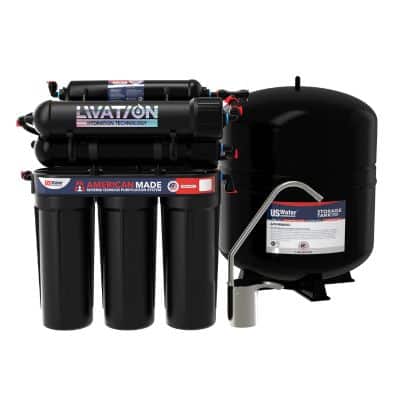
The US Water American Made Reverse Osmosis System is a 6-stage conventional under-sink RO system that has a distinct USP: it’s “built and assembled in America with 98%+ American-sourced parts”.
What We Like
What We Don’t Like
| Price | ~$799 |
| Contaminants Reduced | 10+ |
| Certifications | Not Certified |
| Process | Sediment + Carbon block + Sub‑micron carbon + RO membrane + Post carbon + Optional remineralization |
| Filter Capacity | RO membrane: 3–5 years lifespan; other filters: 6–12 months |
| Annual Cost | ~$228 |
| Warranty | 5 years; 2 years (permeate pump); filters not covered |
Quick Verdict: Is the US Water American Made RO System Worth It?
The US Water American Made RO scores 7.79/10 in our testing, second lowest of the nine conventional tank based RO systems we have scored. In Tap Score lab testing it cut total dissolved solids from 776 PPM to 60 PPM, removed 100% of fluoride (1.9 PPM to 0), 100% of uranium (0.0117 PPM to 0) and 100% of trihalomethanes (19.4 PPB to 0), and held TDS creep to just 5 PPM after a 9 hour overnight stagnation, tied with the APEC ROES-PH75 for the best stagnation result across all ten under sink RO systems on our bench. It also introduced 0.825 PPM of aluminum into the filtered sample, 11.8 times the 0.07 PPM Health Guideline Level, and sent 7.86 gallons to drain for every gallon produced, the worst water efficiency of any tank system we have measured.
Buy it if: you want a US built system with John Guest fittings and 3/8 inch tubing, you want alkaline remineralized water (pH rose from 8.0 to 9.6 in lab testing), and low TDS creep after overnight standing matters more to you than water waste.
Skip it if: you want third party performance certification (this system has none, and the manufacturer states NSF/ANSI 58 certification is still in process), you pay for water or sewer by volume, or you are not willing to accept aluminum, antimony, silver and vanadium appearing in the filtered sample.
Every figure above comes from our own 2026 testing. See our testing methodology for how we score.
We know that a water filter’s origin of manufacture doesn’t necessarily dictate its performance. With that in mind, we were keen to test this system ourselves, to see how effectively it could purify a challenging municipal water supply in Colorado. We also wanted to assess the unit’s design quality and durability, along with other factors that help us understand RO performance, including pure-to-wastewater ratio, flow rate, and TDS creep.
We’ve discussed our test data in this review.
📊 Scoring Data: Overall Score 7.79/10
We wanted to objectively understand the US Water American RO’s performance, especially when compared against the other RO systems we’ve reviewed already. To achieve this, we tested the unit using the same data-driven scoring system that we use for all our filter reviews, assigning scores in each category to allow us to make easy comparisons against other systems across the board.
Our scoring system is weighted, pulling together results from six key categories: contaminant removal, flow rate, build quality, ease of installation, ongoing maintenance costs, and company policies.
We supplemented these core metrics with a number of RO-specific performance analyses, including efficiency ratio and recovery rate. These don’t currently influence the final scores, but they give us more insight into how a system performs with real-world use.
How We Tested the US Water American Made RO System
We installed the system on 6 April 2026 and ran it on municipal water with a feed TDS of 657 PPM by handheld meter and 776 PPM by Tap Score lab analysis. After a 7.5 gallon, 555 minute break in flush across three tank fills, we sent a pre filtration and a post filtration sample to Tap Score by SimpleLab for a 109 analyte Advanced City Water panel covering metals, volatile organic compounds, disinfection byproducts, and general chemistry. We separately measured flow with frame by frame video analysis at a 12 ounce draw (152.45 second average across three draws at 49 PSI static and dynamic, 60.1 degrees F), wastewater ratio by capturing drain and permeate over matched 12 ounce and 64 ounce draw windows, TDS creep by comparing the first and second draw after a 9 hour overnight stagnation, and noise with a calibrated sound meter at one foot and three feet. Scores are produced by our weighted model: Contaminant Reduction 55%, and Filtration Rate, Design, Setup and Maintenance at 10% each, with Company policies at 5%.
You can view the US Water American RO system’s results in the table below.
| Criteria | Results |
|---|---|
| Overall Score | 7.79 |
| Health Related Contaminants | 7.10 |
| Aesthetic Related Contaminants | 9.90 |
| Performance Certification | Not Certified |
| Filtration Rate | 0.04 GPM |
| Component Quality | Outstanding |
| Component Certification | Not Certified |
| Setup | Weak |
| Servicing Requirements | Good |
| Costs | $0.21/ gallon |
| Warranty Length | 5 years |
| Shipping | Free on most orders over $199 to the continental US |
| Returns | 60 days |
🚰 Contaminant Reduction: 7.12/10
Score: 7.12Key Finding: Tap Score analysis found 0.825 PPM of aluminum in the filtered sample against a feed level below the 0.05 PPM detection limit, which is 11.8 times the 0.07 PPM Health Guideline Level and the single largest introduced contaminant reading in our entire RO test database.
When it comes to contaminant reduction, we have high expectations for any reverse osmosis system. RO is known for incredibly thorough filtration that purifies the water by removing virtually everything, rather than targeting select contaminants.
With 6 individual filter cartridges, this US Water Systems model is designed to target everything from sediment to chlorine and chloramine, PFAS, heavy metals, fluoride, and most dissolved solids.
There are two factors that influence our score in this category: how the system performs in our own on-site and lab tests, and the presence of performance certifications for contaminant reduction.
Our Performance Testing
Score: 7.24
Our own tests had the biggest influence on the contaminant reduction score this system received.

Most contaminants were detected using a Tap Score lab test. For this, we took pre- and post-filtration water samples and sent them to Tap Score to be professionally analyzed, receiving two detailed test reports (one for each sample), so we could easily compare the data side-by-side.
To evaluate the system’s ability to reduce contaminants, we compared our data for our before-and-after tests against the Health Guideline Levels (HGLs) as our primary benchmark.
We also tested for several contaminants ourselves using on-site testing. This included:
- Chlorine testing using a digital colorimeter. We tested a sample immediately after drawing it from the faucet, giving us the most accurate chlorine readings without influence by dissipation (chlorine is highly volatile).
- pH tests using a pH meter, which we compared to our Tap Score pH readings.
Health-Related Contaminants
Score: 7.10
Primarily, we wanted to assess how effectively the US Water American RO could reduce contaminants with health effects in our water.
16 of these were detected in our baseline sample, including bromodichloromethane, bromoform, and dibromochloromethane (3 THMs, a category of disinfection byproduct), fluoride, and uranium, which were all detected at concentrations exceeding the HGL.
Barium, boron, copper, molybdenum, total chromium, nitrate, selenium, strontium, sulfate, and vanadium were also detected in trace levels not exceeding the HGL.
The next table shows the full list of contaminants detected and their concentrations.
| Analyte | Unit | Result Value | US Water American Made RO | Difference |
|---|---|---|---|---|
| Alkalinity (as CaCO3) | PPM | 392 | 0 | -100.00% |
| Aluminum | PPM | 0 | 0.825 | #DIV/0! |
| Antimony | PPM | 0 | 0.0013 | #DIV/0! |
| Barium | PPM | 0.0307 | 0.00298 | -90.29% |
| Bicarbonate | PPM | 473 | 0 | -100.00% |
| Boron | PPM | 0.421 | 0.263 | -37.53% |
| Bromodichloromethane | PPB | 2.65 | 0 | -100.00% |
| Bromoform | PPB | 8.48 | 0 | -100.00% |
| Calcium | PPM | 73.4 | 1.23 | -98.32% |
| Carbonate | PPM | 2.18 | 0 | -100.00% |
| Chloride | PPM | 96.8 | 7.3 | -92.46% |
| Chloride-to-Sulfate Mass Ratio | 0.605 | Very High | #VALUE! | |
| Chromium (Total) | PPM | 0.00267 | 0.00072 | -73.03% |
| Copper | PPM | 0.24 | 0 | -100.00% |
| Dibromochloromethane | PPB | 8.24 | 0 | -100.00% |
| Expanded Hardness | PPM | 248 | 27.3 | -88.99% |
| Fluoride | PPM | 1.9 | 0 | -100.00% |
| Grains per gallon | Grains | 14.4 | 1.41 | -90.21% |
| Hardness | PPM | 247 | 24.2 | -90.20% |
| Langelier Saturation Index | 0.783 | N/A | #VALUE! | |
| Magnesium | PPM | 15.5 | 5.13 | -66.90% |
| Molybdenum | PPM | 0.00122 | 0 | -100.00% |
| Nitrate (as N) | PPM | 3.3 | 0.8 | -75.76% |
| pH | pH | 8 | 9.6 | 20.00% |
| Potassium | PPM | 2.96 | 0 | -100.00% |
| Selenium | PPM | 0.00447 | 0 | -100.00% |
| Silver | PPM | 0 | 0.00682 | #DIV/0! |
| Sodium | PPM | 177 | 11 | -93.79% |
| Sodium Adsorption Ratio | 4.89 | 0.972 | -80.12% | |
| Specific Conductivity | umhos/cm | 1330 | 100 | -92.48% |
| Strontium | PPM | 0.755 | 0 | -100.00% |
| Sulfate | PPM | 160 | 0 | -100.00% |
| Total Dissolved Solids | PPM | 776 | 60 | -92.27% |
| Total THMs | PPB | 19.4 | 0 | -100.00% |
| Uranium | PPM | 0.0117 | 0 | -100.00% |
| Vanadium | PPM | 0.00111 | 0.00168 | 51.35% |
Post-filtration, all contaminants exceeding the HGL had been completely eliminated. This is a reassuring result, since THMs are regulated carcinogens, and we’ve found that uranium is commonly detected in many water supplies in the US. Plus, fluoride is a contaminant that many folks are specifically looking to remove when they buy an RO system, since it’s something that most non-RO filters can’t address.
Of the contaminants detected below the HGL, copper, molybdenum, selenium, strontium, and sulfate were removed entirely. Barium was reduced by 90%, total chromium by 73%, and nitrate by 75% — decent, but not the best performance we’ve seen for RO. Comparably, some similar systems we’ve tested have reduced all of these contaminants by 100%.
Boron only dropped 37.5%, but this is expected. Standard RO membranes struggle to address boron due to its small, uncharged molecular form. It’s not a knock on this specific system, but it’s still something to be aware of.
Related: The best conventional reverse osmosis system we’ve tested
Anomalies & Unexpected Results
There were several anomalies with our results that brought down the health-related contaminants score in our testing.
First, our filtered water contained 0.825 PPM of aluminum (exceeding the HGL of 0.07 PPM by a staggering 1,078.57%) when it wasn’t detected in our source water. That’s a significant increase; so much so that we can’t put it down to a measurement blip.
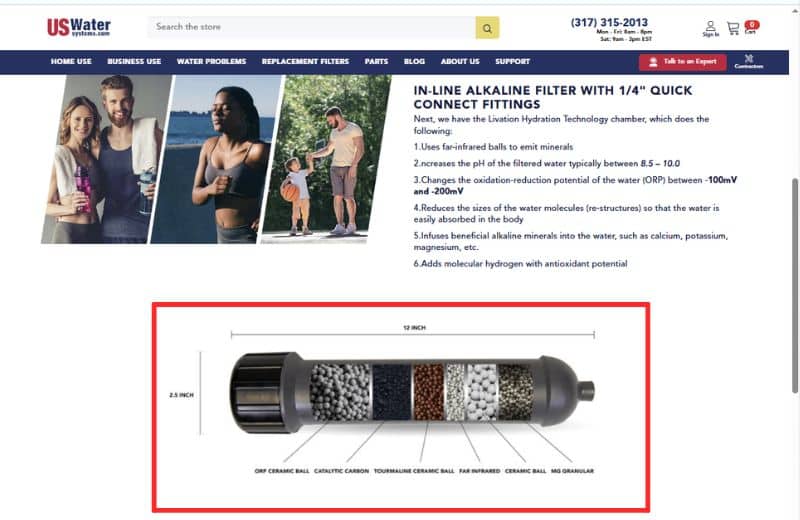
This data tells us that for some reason, the US Water American RO system is adding aluminum to the water. Our hypothesis is that the post-RO remineralization cartridge uses aluminum-containing media, and traces of this media are being released into the water along with the alkalizing/pH-boosting minerals.
The product page lists “ceramic balls” as a media used in this filter, which are typically composed of aluminum oxide known as alumina. Our contact at US Water Systems confirmed this, explaining that the filter uses alumina-based fibers and that at very high pH, alumina can leach a small amount of aluminum.
This is a concerning result given that aluminum has “undeniable human health effects”, including neurodegenerative diseases like Alzheimer’s and Parkinson’s. It’s possible that this leaching is only an issue with relatively new filters, and we might see much lower aluminum concentrations in our water, or no aluminum at all, if we retest the system after using it for several months. We might also have received a defective filter; something we could only confirm by retesting with a new cartridge.
A couple of other contaminants were introduced by the system:
- 0.0013 PPM of antimony (exceeding the HGL of 0.001 PPM)
- 0.00682 PPM of silver (within the HGL of 0.009 PPM)
Again, these could possibly be leaching from the remineralization filter, particularly silver, which is often added to prevent bacteria and algae buildup in the media. Antimony is more of a head-scratcher — possibly this was due to an incidental increase between taking our two tests, but we’d expect it to be removed, since RO is typically highly capable of antimony reduction.
Finally, vanadium, which was detected in our baseline sample, actually increased 51%, from 0.00111 PPM to 0.00168 PPM. Again, this is a contaminant that RO is usually highly capable of removing, so we suspect it was for some reason introduced by the remineralization filter.
We reached out to our contact at US Water Systems to share these results. They informed us that CMF media has been tested under NSF/ANSI 42 material extraction, and the RO system has been tested in standard conditions. In those conditions, they haven’t seen what we reported, but they’re now conducting further testing and investigation based on our findings.
Aesthetics, pH, and Mineral Content
Score: 9.90
The American RO system comes with an optional remineralization upgrade, which, as we’ve already discussed, we chose to include in our filter sequence.
We always opt for remineralization when the manufacturer offers it. A remin filter can help avoid the aesthetic effects of RO purification, which reduces pH and leaves water slightly acidic. Testing an RO system with remineralization allows us to analyze the influence of this final filter stage on overall water quality.
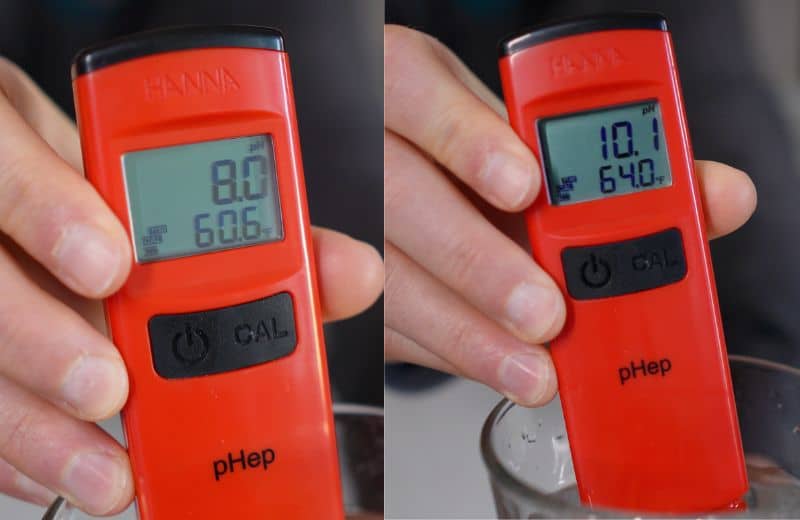
Post filtration, pH increased from 8.0 to 9.6 (or 10.1 in our on-site pH meter tests). That’s the kind of result we expect to see from a remineralization filter, and we achieved similar pH readings with other RO models, too.
Magnesium was reduced by 66.9%, while calcium was reduced by 98.3%. That asymmetry suggests that magnesium is being added back via remineralization media, but calcium is not. We checked the listed filter materials, and Mg (magnesium) granular is mentioned, which confirms these findings.
Sodium was reduced by 93% and potassium by 100%, so the remineralization filter doesn’t appear to reintroduce these ions into water. That said, many RO systems we’ve tested have reduced sodium even more significantly (99-100%). For most folks, this won’t be a big deal, but it’s worth noting if you’re on a low-sodium diet and want to minimize your sodium intake in water as much as possible.
Carbonate and bicarbonate (both direct indicators of alkalinity) were both removed completely, down to 0.
This might look unusual given that we saw such a significant pH increase; you’d expect alkalinity to increase, too. But our theory is that the American RO is using alkaline minerals that raise pH through the addition of hydroxide ions or by acting as a strong base, rather than using the traditional calcium-carbonate buffer system.
TDS & TDS Creep
TDS creep occurs when there’s a temporary increase in TDS levels in the initial draw of water after the unit has been sitting unused for a period of time (such as overnight). It typically only affects tankless RO systems, since they send water straight through the RO membrane to the faucet, without storing the water in a tank.
But in our previous tests, we’ve noticed signs of TDS creep from several tank-based systems, so we test for this across all the RO systems we review.
We used a TDS meter to take on-site TDS measurements, first from a feed water sample, and then several times from the American RO system, after letting it sit idle overnight for 10 hours.
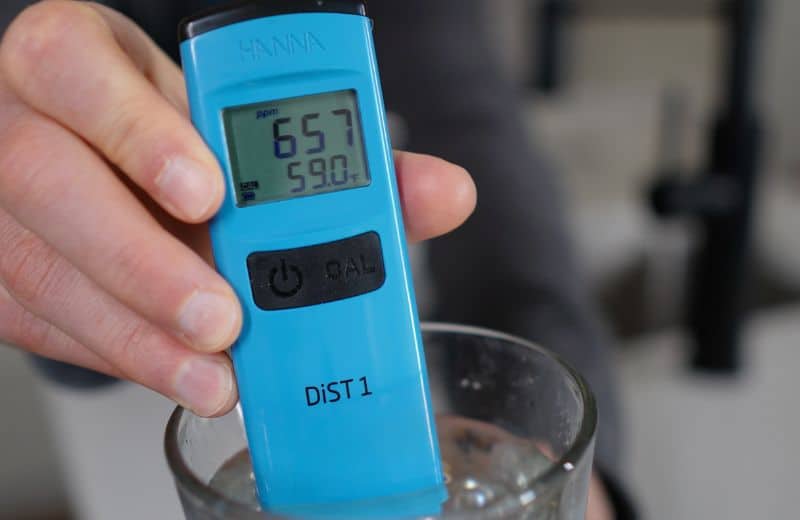
Our initial reading was 657 PPM, and our first-draw sample from the RO faucet measured 50 PPM—not indicative of TDS creep. We then let water run through the system for 2 minutes before taking a second draw reading from a sample collected in a separate glass. This time, the TDS reading was 45 PPM (both before and after remineralization).
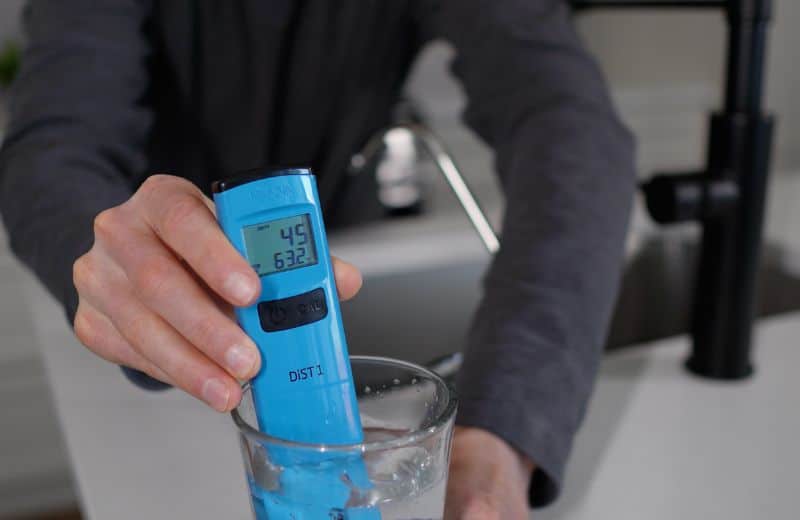
The difference between the 1st and 2nd draw was just 5 PPM: not indicative of TDS creep.
If TDS creep was an issue, we’d expect the first-draw reading to be in the hundreds, and the second-draw reading to be in the 30-60 range, telling us that the initial sample of water had temporarily higher concentrations of dissolved solids.
| Test Condition | TDS (PPM) |
|---|---|
| Feed Water | 657 |
| 1st Draw (After 10 hrs Idle) | 50 |
| Stable TDS (With Remin Filter) | 45 |
| Stable TDS (Without Remin Filter) | 45 |
| TDS Reduction | 93% |
| TDS Creep | 5 PPM |
Performance Certifications
Score: 6.00
We learn a lot about a water filter’s performance from our on-site tests and lab data. But we’re only able to evaluate a system based on whatever our own water supply contains.
That’s why our contaminant reduction score is also influenced by the presence of certifications. These can be obtained (at a fee) from official testing and certification organizations: the NSF, the WQA, and IAPMO.
The American RO doesn’t have any performance certifications, which is a huge letdown, especially as many of its competitors do.
We recently reviewed the Aquasana SmartFlow, another conventional under-sink RO system, which is certified for every single contaminant reduction claim that the manufacturer makes. So if certifications are a dealbreaker for you, there are better alternatives to consider.
🚦Filtration Rate: 10/10
Score: 10.00Key Finding: Measured output was 53.13 gallons per day, 53% of the 100 GPD membrane rating, and the tank refilled to full in 180 minutes from a 2.5 gallon drawdown.
This US Water Systems model has a membrane rating of 100 GPD, which means it’s capable of purifying water at a maximum rate of 100 gallons per day. The actual rate of filtration depends on a couple of factors, including water temperature and pH, as well as your incoming water pressure at the under-sink cold water line.
Tank-based models like the American RO typically have lower filtration rates than tankless systems, as they’re relying on air pressure from the tank to send water to the faucet, rather than using an internal pump. The projected flow rate for this system is around twice as much as what we typically see for conventional RO.
We wanted to see how this compared to our own flow rate testing, with a recorded feed water temperature of 60.1°F and water pressure of 49 PSI. To do this, we filled a graduated measuring container with purified water and timed how long it took.
To get the most accurate results down to the millisecond, we video recorded the test and uploaded the footage onto an editing tool, where we moved through frame by frame to get precise start and end points.
In our first test, it took 154.45 seconds to fill a measuring jug to the 12-ounce line, based on our average from 3 identical tests. This translates to a flow rate of 0.04 GPM (gallons per minute), or 2.24 GPH (gallons per hour).
In gallons per day, that’s approximately 53.13 GPD, making it around 20 GPD faster than many of the other conventional RO systems we’ve tested.
Remember, the 100 GPD rating is the maximum flow rate that the filter can achieve, and our cooler feed water and lower incoming pressure likely affected filtration speed.
| Test Metric | Result |
|---|---|
| Time to Fill 12 oz | 154.45 seconds |
| Measured Flow Rate | 0.04 GPM |
| Gallons Per Hour | 2.24 GPH |
| Converted GPD | 53.13 GPD |
| Manufacturer Claim | 100 GPD |
Efficiency Ratio
One test that we conduct only for reverse osmosis systems is our efficiency ratio analysis. This helps us to understand the volume of purified water an RO system produces against the volume of water it sends to drain during this process.
All RO systems have a rated efficiency ratio, also known as a recovery rate or pure-to-wastewater ratio. US Water Systems says its RO units are “engineered for higher recovery rates”, but we couldn’t find any data on the American RO’s efficiency ratio on the product page. We reached out to customer support, but we didn’t receive a response, even after sending a follow-up email.
We expected this system to waste more water than a tankless model because of its slower filtration. Without an internal pump, water travels through the RO membrane at a slower rate, so the volume of reject water is higher.
To measure efficiency ratio in our own setup, we disconnected the drain line and directed the wastewater into a measuring container, while we filled a separate container with 12 ounces of purified water.
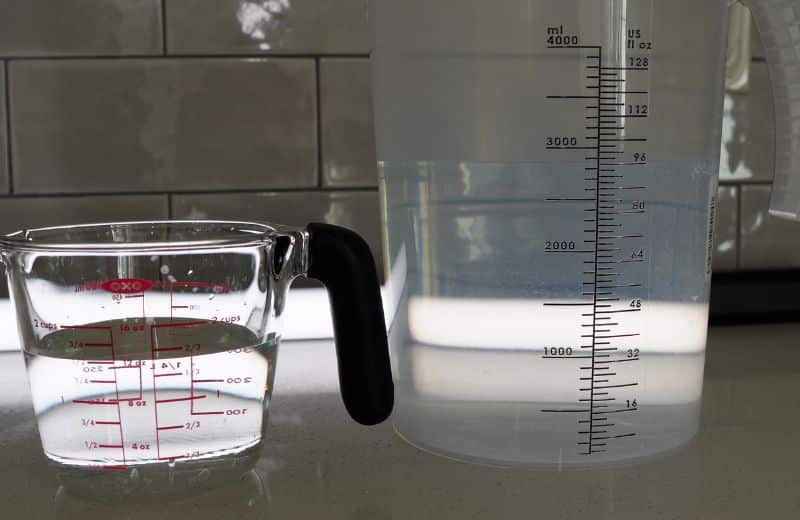
When the 12-ounce line was reached, 97 ounces of wastewater had been collected, translating to an efficiency ratio of around 11.01%. That means 8.08 ounces of water is wasted per 1 ounce purified, which is not efficient at all.
It’s true that our test water conditions don’t allow for the most efficient performance: it’s generally recommended to have a water pressure of 60–80 PSI and a temperature of around 77°F, so our own water pressure of 49 PSI and temperature of 60.1°F likely reduced the system’s efficiency. That said, it’s still one of the highest wastewater volumes we’ve recorded in this test.
We then repeated the process with a larger purified water draw of 64 ounces (½ gallon). This time, 503 ounces of drain water were produced, equating to a recovery rate of 11.29% (so, 7.8 ounces wasted per 1 ounce purified). That’s better, but still pretty terrible.
| Test Volume | Wastewater Produced | Pure-to-Drain Ratio |
|---|---|---|
| 12 oz Test | 97 oz | 1:8.08 |
| 64 oz Test | 503 oz | 1:7.8 |
| Claimed by Manufacturer | — | Not Stated |
What does this mean for you? If you choose to buy this system, you’ll end up wasting around 2-5x more water compared to most of the other RO units we tested. All our tests were conducted with the same water supply, so the American RO’s inefficient performance can’t be blamed on a one-off difference in our water temperature or pressure.
📐 Design: 8.10/10
Score: 7.50Key Finding: The system uses John Guest fittings and 3/8 inch tubing on the tank and faucet lines rather than the 1/4 inch used by most competitors, but carries 23 fitting connection points with the CMF final stage installed, the second highest leak point count in our tank based test set.
When we award scores for design, we’re looking at two factors: our own notes on component quality, and the presence of design certifications.
The US Water American RO system has quite a bulky design, especially since there are 6 separate filter cartridges.
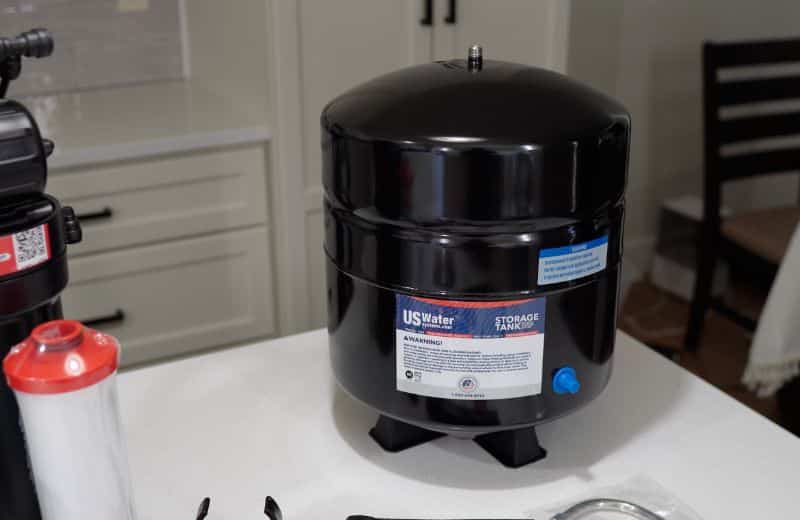
The unit also comes with a 4.5-gallon storage tank that holds RO water that has been purified. Plus, there’s a dedicated faucet, which is available in various finishes: brushed chrome, brushed nickel, chrome, and stainless steel. The idea is that you install this alongside your existing faucet rather than as a replacement, so you can still use unfiltered tap water for non-drinking purposes.
Component Quality
Score: 9.50
We noted that the American RO uses higher-quality components than many other conventional RO systems we tested. It uses John Guest fittings, which are known for being versatile and high-quality.
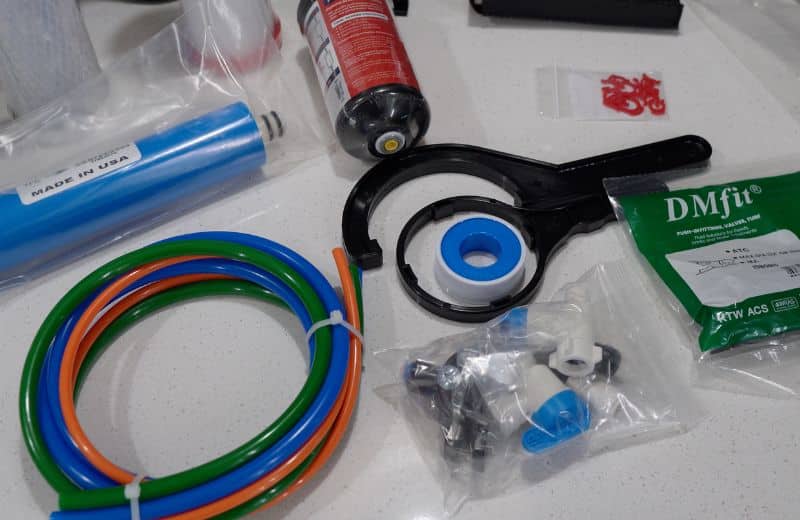
The unit has several design features that point to a well-thought-out design:
- The tubing for the tank and faucet lines has a larger diameter (⅜-inch), to allow for a faster flow from the faucet.
- The faucet already has a ¾-inch push-connect fitting built in; helpful for quicker installation.
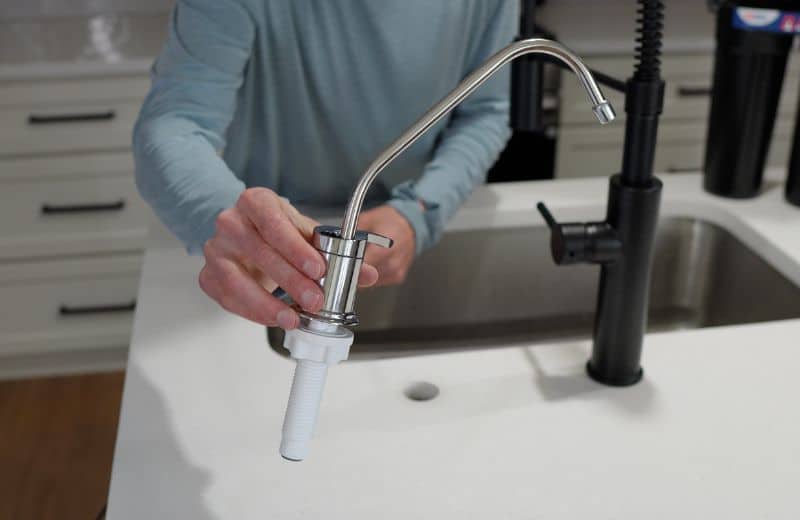
We couldn’t find any information on the product page about the types of plastics that are used in this system. We reached out to customer support, who told us that
One design issue we noted was that the faucet has a lag where it continues dripping for a second after it has been turned off. While this isn’t a huge deal, it will contribute to extra water usage over time.
Filter Materials
There are 6 separate filter stages in the American RO:
- A 5-micron sediment filter
- A 10-micron carbon block filter
- A sub-micron carbon block filter
- A reverse osmosis membrane
- A granular activated carbon post-filter
- An optional remineralization filter, made from ceramic balls, catalytic carbon, far infrared, and Mg granular
While the system contains more filtration stages than the average RO setup, there are no unexpected or especially unique filter media here. It’s great to see the use of sub-micron carbon for choramine reduction; something that RO membranes and standard carbon block filters often struggle to remove.
Materials Safety Certification
Score: 6.00
When a water filter has a materials safety certification awarded by the NSF, IAPMO, or the WQA, it’s evidence of construction quality beyond the manufacturer’s own claims.
There are two design certifications that an RO filter can obtain:
- NSF/ANSI 372, for lead-free design
- Materials safety, obtained as part of a performance certification
The American RO is currently not certified for materials safety at all. It’s possible that this could be coming soon, depending on the nature of the NSF 58 certification that US Water Systems has applied for.
⚙️ Setup: 7.00/10
Score: 7.00Key Finding: Installation took 150 minutes and required drilling, and the manufacturer supplies no printed instructions, only a QR code linking to the manual, videos and FAQs.
Installing an under-sink RO system is already fairly complicated, with a drainline to connect and a dedicated faucet to install. But conventional systems like this US Water model add an extra layer of complexity with the addition of a storage tank.
We chose to DIY-install the unit ourselves, and the entire process took 2.5 hours from start to finish. This is longer than our average install time for an RO system; most other models took between 1.5 and 2 hours to install.
The box has a QR code that you can scan to view the user manual, as well as installation videos and FAQs. There are no paper instructions included, which wasn’t a problem for us, but could be an annoyance to you depending on your preferences.
The final remineralization filter stage is installed after the post-filter on the main RO unit, inline on the faucet line. This takes a bit more effort than if the filter was included in the unit itself, but it’s an optional add-on, so we can understand why it’s separate.
There’s a pipe cutter tool included in the box, which is a nice bonus. We also appreciated the included handheld TDS meter, since this makes it quick and easy to test that the system is working as it should once it’s installed.
There were a couple of setbacks that we experienced during the installation:
- First, while the tubing is different colors, there are no markings, colors, or indicators on the connections to show which color goes where (like many similar systems have), which means we had to refer to the manual. It’s not a massive issue, but it does make the process take longer than necessary.
- Second, the manual says that the tank should be pre-pressurized at 7 PSI and instructs us to check this and add or release air as required. We checked using our Viair pump, and the pressure was at 5.8 PSI, so we had to add air to get it up to 7.
We detected 23 potential leak points at the fittings and connections, although no leaking occurred during our testing.
Once we’d installed the system, we then had to flush the filters before we could start using them. This involved an initial pressurization and flush, which took 15 mins, followed by filling and emptying the tank twice. On the third tank refill, the water was ready to use. This filling process took 3 hours each; 9 hours total.
Noise
We used a phone app to measure the noise produced (in decibels) by the American RO system while it was in operation. Since the system is tank-based and doesn’t use an internal pump, we expected it to be quieter than a tankless model with a pump.
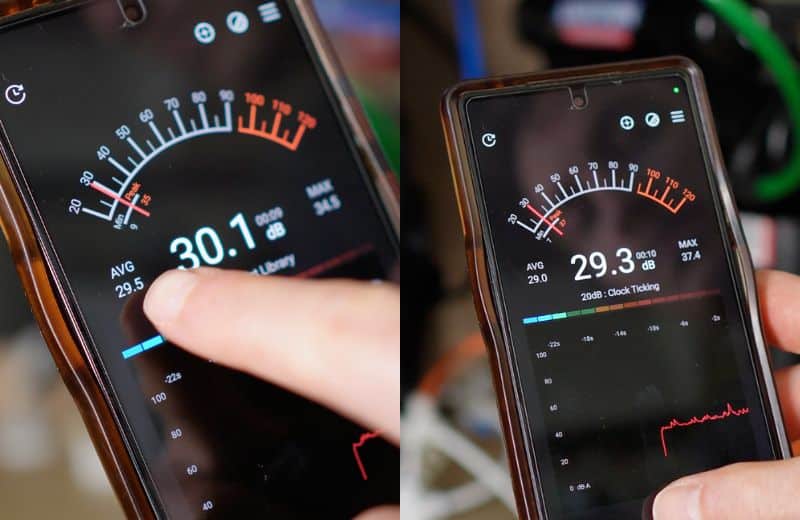
We measured sound decibels at 1 foot and 3 feet away:
- At 1 foot, the unit produced 29.5 decibels.
- At 3 feet, it produced 29 decibels.
That’s quieter than a refrigerator, which produces an average noise volume of between 32 and 47 decibels. In fact, there’s every chance that our phone app was picking up noise from the refrigerator in the kitchen rather than the RO unit itself.
🔧 Maintenance: 9.25/10
Score: 8.75Key Finding: Annual filter cost is $228.41, and the remineralization filter alone accounts for $82.10 of that, 36% of ongoing spend, because it is rated for only 2,000 gallons.
Maintenance is a big part of keeping an RO system in proper working order throughout its lifespan. Here’s our data for this US Water Systems model’s servicing requirements and ongoing costs.
Servicing Requirements
8.50
The American RO has 6 filters to change at a recommended 6- to 12-month intervals, depending on your water quality. The RO membrane is the exception, with a projected service life of 3-5 years (longer than the average 1-2 years).
There’s no digital display on the unit with filter replacement indicators, so you’ll need to make your own filter change reminders (something we find easiest to do on our phone calendar).
The user manual briefly discusses filter replacement schedules, although you may need to replace a filter earlier depending on your water hardness, pH, and sediment levels. This can be hard to deduce when there are multiple filter stages, but if you notice a significant reduction in flow rate, this is typically a good sign that a new filter is needed. Otherwise, stick to the schedule outlined in the manual.
Replacing the filters involves the same steps as installing them initially: pushing them up until they are seated in the top, then screwing the sump on from below once they’re in place.
Every time you install a new filter, the system needs to be flushed by filling and emptying the tank 3 times; the same process that follows the initial install. At least the majority of the filters can be replaced at the same time, so you should only have to do this once or twice a year.
Costs
Score: 10.00
We calculated that the US Water American RO has an overall ongoing spend of $0.21 per gallon, equivalent to a total annual cost of $228.41, or a 5-year ownership cost of $1,941.07.
That’s within the average range of $1,000–$2,000 when compared to the other systems we’ve tested.
🏢 Company: 8.90/10
Score: 8.90Key Finding: US Water Systems warrants the tank and valves for 5 years and states that NSF/ANSI 58 certification is still in process, so no completed third party performance certification exists for this system as of 2026.
Finally, we did a deep dive into US Water Systems as a company, based on its warranty, shipping, and returns offerings.
Warranty
Score: 9.50
The American RO is backed by a 5-year warranty, which warrants that the system “shall be free from defects in material and workmanship”. It covers the filter housings, brackets, tank, and fittings.
There’s also a 2-year warranty for the permeate pump. The filters themselves aren’t covered by the warranty, as is the norm across pretty much all water filters we’ve tested.
The warranty only applies if you’ve correctly installed, operated, repaired, and maintained the system according to the user manual.
You can find the warranty information at the bottom of the user manual.
Shipping
Score: 9.00
US Water Systems offers free shipping on most orders over $199 to the continental US.
That means the system itself will be shipped at no additional cost, but you’ll need to pay a shipping fee (which depends on the provider and the weight of the package) for replacement filters.
If you’re making a subscription order, the minimum spend for free shipping is slightly lower: $150.
View US Water Systems’ shipping policy here.
Returns
Score: 8.00
The American RO product page highlights a “1- year guarantee of satisfaction” as an included benefit when you buy the system. This is a bit misleading—after further investigation, we found that the guarantee only applies to systems recommended by their sales team, “crafted for your water needs by our Certified Water Specialists.”
Otherwise, you can still return your system, but only if it’s new, unused, and unopened, and in original packaging. And you only have 60 days to do so.
Here’s the US Water Systems returns policy for more information.
💰 Value For Money: $799 Upfront, $228.41 Per Year
Key Finding: At $799 for the tested 6 stage alkaline configuration, this is the most expensive tank based RO system we have tested, with a five year cost of ownership of $1,941.07 at 3 gallons per day.
The US Water Systems American RO looks impressive on paper, but in our own testing, it fell short.
The fact that aluminum was introduced into our water in concentrations exceeding the HGL, along with trace levels of vanadium, antimony, and silver, is concerning to say the least.
It also currently has no performance certifications (although this could soon change), and no certifications for design. Plus, it wasted quite a bit more water than most similar units we reviewed.
The system wasn’t any more difficult to install, expensive to maintain, or slower to filter our water than most other conventional RO units we tested.
But it currently doesn’t have any selling points when we compare it to other models, some of which have performance certifications across the board, others which reduced 100% of virtually all contaminants in our water without introducing any harmful substances.
With all that said, we don’t think the value for money is particularly there at the moment. Perhaps this will change if the filter becomes certified and the potential for aluminum leaching is addressed, but for now, it’s not one of our top recommended conventional RO systems for drinking water filtration.
❔ FAQ
Q: Does the US Water American Made RO system remove fluoride?
A: Yes. In our Tap Score lab testing, fluoride dropped from 1.9 PPM in the feed water to 0 PPM in the filtered sample, a 100% reduction.
Q: Why did the US Water American Made RO system add aluminum to our water?
A: Our post filtration Tap Score sample contained 0.825 PPM of aluminum against a feed level below the 0.05 PPM detection limit, which is 11.8 times the 0.07 PPM Health Guideline Level. The system also introduced antimony at 0.0013 PPM and silver at 0.00682 PPM, and vanadium rose from 0.00111 PPM to 0.00168 PPM. The most likely source is the remineralization stage, which is the only component downstream of the RO membrane that adds material back into the water.
Q: How much water does the US Water American Made RO system waste?
A: It sent 7.86 gallons to drain for every gallon produced over a 64 ounce draw window, an 11.29% recovery rate, and 8.08 gallons to drain per gallon produced over a 12 ounce draw, an 11.01% recovery rate. That is the worst water efficiency of the nine tank based RO systems we have measured.
Q: Is the US Water American Made RO system NSF certified?
A: No. The system holds no NSF, WQA or IAPMO performance certification. US Water Systems states that NSF/ANSI 58 certification is in process. It is the only tank based system in our test set with no certification at all.
Q: How long does the US Water American Made RO system take to install?
A: Installation took us 150 minutes and required drilling for the faucet. After installation, the break in flush consumed 7.5 gallons over 555 minutes, made up of a 15 minute initial flush plus three full tank fills at roughly 3 hours each. The third tank of water is the first that is usable.
Q: US Water American Made RO vs APEC ROES-PH75?
A: The APEC ROES-PH75 scores 8.87 out of 10 against the US Water American Made RO at 7.79. Both tied for the best TDS creep result in our test set at 5 PPM, and both achieved comparable TDS rejection, 93.20% for the APEC against 93.15% for the US Water. The APEC is far more efficient, sending 5.13 gallons to drain per gallon produced against 7.86 for the US Water, costs $132.84 per year in filters against $228.41, and carries WQA certification to NSF/ANSI 58, which the US Water lacks. The US Water delivers more water per day (53.13 GPD against 42.75 GPD) and uses higher grade John Guest fittings. Read our full APEC ROES-PH75 review.
Found this review helpful?
Comment below or share this article!