

To compare Rorra vs Berkey in terms of performance, quality, and overall value for money, we tested both systems and scored them based on objective data (not a paid sponsorship).
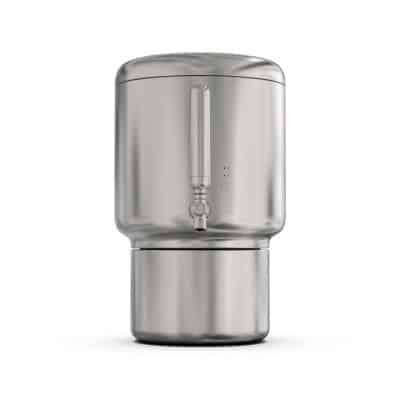
Rorra
Best For:
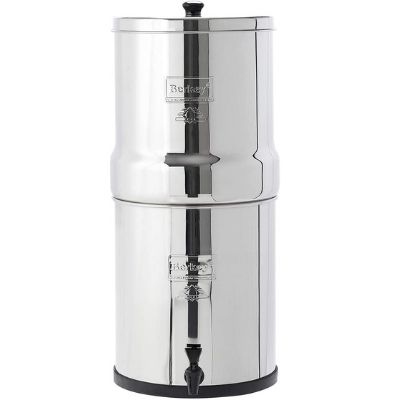
Berkey
Best For:
Quick Verdict: Rorra or Berkey?
Rorra wins our comparison with an overall score of 8.33/10 versus the Big Berkey’s 8.02/10, based on first-party lab testing of both systems with Tap Score.
The sharpest numbers from our lab data: Rorra removed 100% of the uranium, barium, copper, and zinc in our water, while Berkey leached 1.44 PPM of aluminum (almost three times the Tap Score Health Guideline Level) into our test 1 filtered water.
Choose Rorra if: you want a nearly plastic-free design, a 25-minute setup with no filter priming, and the fastest gravity filtration we’ve measured (3 GPH).
Choose Berkey if: you need fluoride removal (Berkey’s PF-2 filters removed 100% in our second test; Rorra removed 0%), want a choice of six vessel sizes, or want lower per-gallon running costs.
Neither system holds an official performance certification from the NSF, WQA, or IAPMO.
See how we test water filters for our full methodology.
Berkey has a few different models, but for this review, we’ll be referencing our test of the 2.25-gallon Big Berkey, with two Black Berkey elements and two PF-2 fluoride filters.
Both units were capable of reducing or removing most contaminants in our water, but Berkey leached aluminum oxide into our water, while manganese and potassium were introduced into our water filtered by Rorra. Rorra’s design is much higher-quality compared to Berkey, and we were able to get it assembled and ready for use with a much quicker, easier process. Neither system is certified for contaminant reduction, and both are more expensive than their competitors (especially Rorra).
📊 Our Testing Data: Rorra Scored 8.33, Berkey Scored 8.02
We tested and ranked the Rorra and Big Berkey systems using 6 main assessment criteria. The next table highlights their scores across each of these performance categories.
| Factor | Rorra | Berkey |
|---|---|---|
| Contaminant Reduction | 7.71 | 8.25 |
| Filtration Rate | 10.00 | 7.50 |
| Design | 8.40 | 7.80 |
| Setup | 8.50 | 6.50 |
| Maintenance | 9.75 | 8.50 |
| Company | 8.50 | 9.10 |
Each category contains its own testing subcategories. See the table below for a more in-depth look at the data from each test we conducted.
| Factor | Rorra | Berkey | Winner |
|---|---|---|---|
| Overall Score | 8.33 | 8.02 | Rorra |
| Health Related Contaminants | 7.80 | 8.60 | Berkey |
| Aesthetic Related Contaminants | 9.90 | 6.70 | Rorra |
| Performance Certification | Not Certified | Not Certified | Tie |
| Filtration Rate | 3 GPH | 0.75 GPH | Rorra |
| Component Quality | Exceptional | Excellent | Rorra |
| Component Certification | Not Certified | Not Certified | Tie |
| Setup | Good | Failing | Rorra |
| Servicing Requirements | Exceptional | Weak | Rorra |
| Costs | $0.37/ gal | $0.13/ gal | Berkey |
| Warranty Length | 12 months | Lifetime | Berkey |
| Shipping | $16 shipping; free over an unspecified order minimum. | Free shipping on orders over $99 to the lower 48 states | Berkey |
| Returns | 30 days | 30 days | Tie |
🚰 Contaminant Reduction: Berkey Won (8.25 vs 7.71)
Key Finding: Berkey outscored Rorra because its PF-2 filters removed 100% of fluoride in our second lab test, while Rorra removed 0%, but Berkey also leached 1.44 PPM of aluminum into our test 1 water, almost three times the Tap Score Health Guideline Level.
The primary purpose of any water filter is to remove contaminants from drinking water, so this factor has the most influence on a product’s overall score in our scoring system.
In this category, we compared Rorra vs Berkey contaminant reduction data to see which was best at reducing unwanted impurities and improving our water quality. We also checked certification databases online to see if any of the systems had obtained official certifications for their contaminant reduction performance.
The Products We Tested
- We tested Berkey with two Black Berkey elements and two PF-2 fluoride filters.
- We tested Rorra with one Enfinity filter (the company doesn’t currently sell separate fluoride filters).
Our Lab Test Results
We used Tap Score lab tests to evaluate both Rorra and Berkey’s contaminant reduction performance.

To collect our samples for testing, we followed an identical process for both systems. This involved filling a bucket with tap water and stirring it thoroughly so the contaminants were spread evenly throughout the sample.
We then poured water from the bucket into each filtration unit, taking a separate sample of the untreated water for baseline testing.
After waiting for water to filter through the systems, we took a second filtered water sample from each dispenser spout. Our baseline and filtered water samples were sent to Tap Score’s laboratory for testing.
There are a few other important details to mention here:
- We tested Rorra and Berkey on different occasions, using different water supplies with their own unique compositions. We’ve highlighted the contaminants detected in each test when discussing each filter’s performance.
- Berkey underwent two separate rounds of testing, which we’ll explain in more detail later in this section.
- For consistency, we used the same Tap Score lab analysis test for all our tests.
- Before we began testing, we made sure both Rorra and Berkey had processed 50 gallons of water to eliminate the likelihood of anomalies caused by different testing processes.
We’ve listed the contaminants detected in our source water and the % of contaminants removed by Berkey and Rorra in the tables below.
Rorra Lab Results
| Analyte | Type | Unit | Pre | Post | Difference |
|---|---|---|---|---|---|
| Alkalinity (as CaCO3) | Properties | PPM | 81 | 83 | 2.47% |
| Barium | Metals | PPM | 0.031 | 0 | -100.00% |
| Bicarbonate | Minerals | PPM | 98.37 | 100.4 | 2.06% |
| Calcium | Minerals | PPM | 26.9 | 17.8 | -33.83% |
| Carbonate | Minerals | PPM | 0.18 | 0.37 | 105.56% |
| Chloride | Inorganics | PPM | 13.5 | 13 | -3.70% |
| Chloride-to-Sulfate Mass Ratio | Properties | 1.59 | 1.49 | -6.29% | |
| Copper | Metals | PPM | 0.0654 | 0 | -100.00% |
| Fluoride | Inorganics | PPM | 1.4 | 1.4 | 0.00% |
| Grains per gallon | Properties | Grains | 5.55 | 4.08 | -26.49% |
| Hardness | Properties | PPM | 94 | 70 | -25.53% |
| Hardness (Ca,Mg) | Properties | PPM | 94 | 70 | -25.53% |
| Hardness (Total) | Properties | PPM | 94.94 | 69.91 | -26.36% |
| Langelier Saturation Index | Properties | -0.66 | -0.53 | -19.70% | |
| Magnesium | Minerals | PPM | 6.58 | 6.17 | -6.23% |
| Manganese | Metals | PPM | 0 | 0.0017 | N.A |
| Molybdenum | Metals | PPM | 0.006 | 0.0043 | -28.33% |
| Nitrate (as N) | Inorganics | PPM | 2.6 | 1.9 | -26.92% |
| pH | Properties | pH | 7.6 | 7.9 | 3.95% |
| Phosphorus | Inorganics | PPM | 1.1 | 0 | -100.00% |
| Potassium | Minerals | PPM | 0 | 3.48 | N.A |
| Sodium | Minerals | PPM | 10.7 | 19.5 | 82.24% |
| Sodium Adsorption Ratio | Properties | 0.48 | 1.01 | 110.42% | |
| Specific Conductivity | Properties | umhos/cm | 234 | 234 | 0.00% |
| Strontium | Metals | PPM | 0.144 | 0.044 | -69.44% |
| Sulfate | Inorganics | PPM | 8.5 | 8.7 | 2.35% |
| Total Dissolved Solids | Properties | PPM | 138 | 138 | 0.00% |
| Uranium | Metals | PPM | 0.0322 | 0 | -100.00% |
| Zinc | Metals | PPM | 0.248 | 0 | -100.00% |
Berkey Lab Results
| Test | Parameter | Type | Measurement | Pre-Filtration | Post-Filtration | % Change |
|---|---|---|---|---|---|---|
| 1 | Aluminum | Metals | PPM | 0 | 1.44 | #DIV/0! |
| 1 | Barium | Metals | PPM | 0.0317 | 0 | -100.00% |
| 1 | Bromodichloromethane | Disinfection Byproducts | PPB | 4.04 | 0 | -100.00% |
| 1 | Calcium | Minerals | PPM | 32.2 | 0 | -100.00% |
| 1 | Chloride | Inorganics | PPM | ND | ND | #VALUE! |
| 1 | Chloroform | Disinfection Byproducts | PPB | 23 | 0 | -100.00% |
| 1 | Cobalt | Metals | PPM | 0.0031 | 0.003 | -3.23% |
| 1 | Copper | Metals | PPM | 0.255 | 0 | -100.00% |
| 1 | Fluoride | Inorganics | PPM | 0.2 | 0.1 | -50.00% |
| 1 | Iron | Metals | PPM | 0.1 | 0.03 | -70.00% |
| 1 | Lead | Metals | PPM | 0.0027 | 0 | -100.00% |
| 1 | Magnesium | Minerals | PPM | 8.92 | 0 | -100.00% |
| 1 | Manganese | Metals | PPM | 0.0014 | 0 | -100.00% |
| 1 | Potassium | Minerals | PPM | 1.86 | 13.1 | 604.30% |
| 1 | Sodium | Minerals | PPM | 12.6 | 12.6 | 0.00% |
| 1 | Strontium | Metals | PPM | 0.168 | 0 | -100.00% |
| 1 | Sulfate | Inorganics | PPM | 16.6 | 1.6 | -90.36% |
| 1 | Total Coliforms | Bacteria | CFU/100mL | 15 | 0 | -100.00% |
| 1 | Total THMs | Disinfection Byproducts | PPB | 27.04 | 0 | -100.00% |
| 2 | Aluminum | Metals | PPM | 0.052 | 0.069 | 32.69% |
| 2 | Barium | Metals | PPM | 0.0127 | 0 | -100.00% |
| 2 | Bromodichloromethane | Disinfection Byproducts | PPB | ND | ND | #VALUE! |
| 2 | Calcium | Minerals | PPM | 8.8 | 34.6 | 293.18% |
| 2 | Chloride | Inorganics | PPM | 6.9 | 8.7 | 26.09% |
| 2 | Chloroform | Disinfection Byproducts | PPB | 35.2 | 0 | -100.00% |
| 2 | Cobalt | Metals | PPM | ND | ND | #VALUE! |
| 2 | Copper | Metals | PPM | 0.0434 | 0 | -100.00% |
| 2 | Fluoride | Inorganics | PPM | 0.1 | 0 | -100.00% |
| 2 | Iron | Metals | PPM | ND | ND | #VALUE! |
| 2 | Lead | Metals | PPM | 0.0006 | 0 | -100.00% |
| 2 | Magnesium | Minerals | PPM | 2.19 | 9.88 | 351.14% |
| 2 | Manganese | Metals | PPM | 0.001 | 0 | -100.00% |
| 2 | Potassium | Minerals | PPM | 0 | 1.68 | #DIV/0! |
| 2 | Sodium | Minerals | PPM | 10.4 | 9.29 | -10.67% |
| 2 | Strontium | Metals | PPM | 0.062 | 0.138 | 122.58% |
| 2 | Sulfate | Inorganics | PPM | 10 | 23 | 130.00% |
| 2 | Total Coliforms | Bacteria | CFU/100mL | ND | ND | #VALUE! |
| 2 | Total THMs | Disinfection Byproducts | PPB | 35.2 | 0 | -100.00% |
Health-Related Contaminants
The systems performed similarly when reducing health-related contaminants in our water, but Berkey got the highest score (8.60 compared to 7.80) because its PF-2 filters were able to remove fluoride.
Our Rorra Results
Starting with the Rorra Enfinity filter testing, our baseline sample contained 10 contaminants with possible health effects.
These included 0.032 PPM uranium (exceeding the Health Guideline Level of 0 PPM) and 1.44 PPM fluoride (exceeding the HGL of 0.799 PPM), along with sulfate, zinc, nitrate, strontium, molybdenum, barium, phosphorus, and copper.

Post-filtration, barium, copper, uranium, zinc, and phosphorus had all been completely eliminated. But nitrate was only reduced by 26.92%, molybdenum by 28.33%, and strontium by 69.44%.
Fluoride wasn’t removed at all, which was disappointing but not altogether surprising. This typically requires specialized technology, and Rorra doesn’t claim to remove fluoride.
There were a couple of unexpected results in our Rorra tests:
- Manganese, which was absent in our baseline sample, was detected post-filtration at 0.0017 PPM
- Potassium was also detected post-filtration, this time at 3.48 PPM, when it was absent pre-filtration
Initially, we suspected that this could be caused by leaching from a potassium and sodium-loaded ion exchange resin, but the only media mentioned in the product description is the electrokinetic nanofilter.
How Berkey Compared
We conducted two separate tests for Berkey because of an issue we experienced in our initial test.
In our first test, 10 contaminants with potential health effects were detected in our unfiltered water. Chloroform and bromodichloromethane (both disinfection byproducts), along with cobalt and lead, were detected in concentrations exceeding the HGL. Copper, barium, fluoride, manganese, strontium, and sulfate were all detected below the HGL.
Like Rorra, Berkey reduced 100% barium and copper. It also did a better job than Rorra at reducing strontium by 100%.
Additionally, lead, disinfection byproducts, and manganese were all eliminated. Cobalt was reduced by just 3.23%.
Disappointingly (and unexpectedly, given that we tested Berkey with the PF-2 filters), fluoride was only reduced by 50%, and 1.4 PPM of aluminum (almost three times the Tap Score HGL) was detected in our water. We suspected this was activated alumina leaching from the PF-2 fluoride filters.
That’s why we retested Berkey with a new set of fluoride filters. This time, we made absolutely sure to follow the (very specific) priming and installation instructions.
In test 2, 100% fluoride was reduced, and only 0.069 PPM of aluminum was detected in our filtered water (still increased compared to baseline).
But potassium and sodium increased substantially in our filtered water, which we suspect came from the water we used to prime the filters — an anomaly we noticed with several countertop filters that we tested at the same time.
Aesthetic Contaminants
Rorra and Berkey both removed 100% chlorine (the only aesthetic contaminant detected in our unfiltered water). But Rorra got the higher score of 9.90, with Berkey receiving a lower score of 6.70.
Certifications
Berkey has been independently lab-tested, while Rorra has been NSF tested (not the same as being NSF certified).
Both filters could improve by obtaining official performance certifications from the NSF, WQA, or IAPMO.
In order to be certified, a water filter needs to meet specific performance and safety standards in strict testing conditions. That’s why Rorra didn’t receive a higher score than Berkey despite being NSF tested. Any manufacturer could get their products tested by the NSF, and it doesn’t guarantee safety and performance in the same way that certifications do.
🚦Filtration Rate: Rorra Won (10.00 vs 7.50)
Key Finding: Rorra filtered at 3 GPH, four times faster than Berkey’s 0.75 GPH and one of the fastest rates of any gravity filter we’ve tested.
As gravity-fed systems, Rorra and Berkey filter water slowly and steadily through their filters. We measured their rate of filtration in gallons per hour (GPH) by timing how long they took to filter a batch of water.
Take a look at their filtration times and flow rates in the table below.
| Product | Filtration Rate Score | Filtration Rate |
|---|---|---|
| Rorra | 10.00 | 3.0 GPH |
| Berkey | 7.50 | 0.75 GPH |
Rorra’s product page promises to filter “faster than the competition”, and it had one of the fastest flow rates of all the gravity filters we’ve tested: 3 gallons per hour (GPH).
Berkey’s filtration rate was also outside of the norm, but on the opposite end: it was slower than many similar systems we’ve tested, with a filtration rate of 0.75 GPH.
It’s possible that Berkey’s flow rate is slower because there are two individual filter stages for water to filter through (the Black Berkey elements and the PF-2 fluoride filters), while Rorra has a single filter.
💲 Upfront Cost: Berkey Costs $182 Less
Key Finding: The 2.25-gallon Big Berkey cost $367 with two Black Berkey elements at the time of our review, while the 2.5-gallon Rorra cost $549 with one Enfinity filter; both are more expensive than the average stainless steel gravity filter.
Berkey is on the more expensive end for a stainless steel gravity filter. Rorra is even more expensive:
- The 2.25-gallon Big Berkey, including two Black Berkey filters, costs $367.
- The 2.5-gallon Rorra Countertop System, including one Enfinity filter, costs $549.
Most likely, you could find the Big Berkey at a lower price if you shopped around (Berkey filters are sold by different distributors, and we sourced our pricing information from BigBerkeyWaterFilters.com).
Do we think that Rorra is worth the extra spend? In short, no. There are other alternatives to Berkey that performed better in our tests overall and have lower upfront costs.
📐 Design: Rorra Won (8.40 vs 7.80)
Key Finding: Rorra limits plastic to silicone o-rings and food-grade polypropylene end caps, while Berkey’s plastic spigot leaked during our testing and neither system holds a materials safety certification.
We compared Rorra and Berkey in the design category by weighing up their different models and finishes, as well as the types and quality of materials used. We also assign scores in this category based on the presence (or lack of) certifications for materials safety.
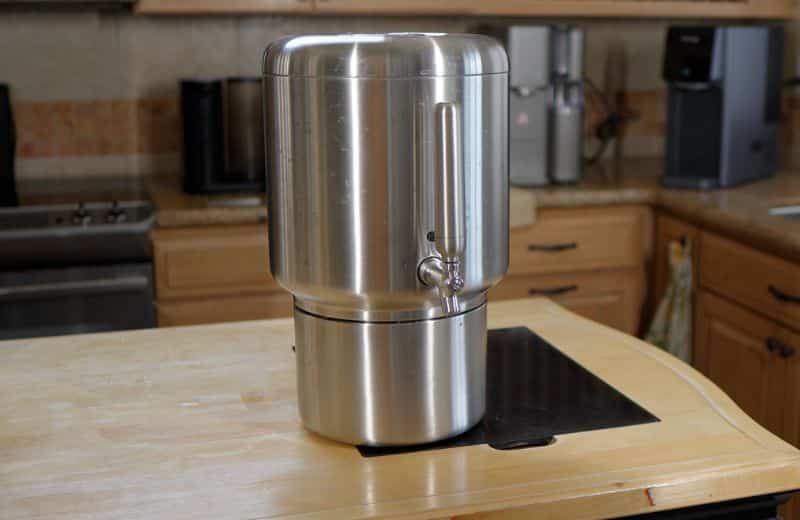
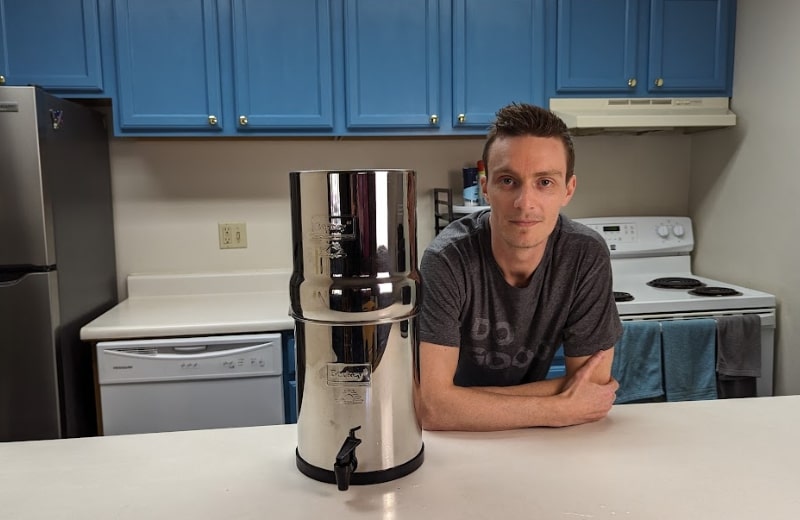
You can check out the scores obtained by the systems in the table below.
| Product | Design Score | Component Quality | Materials Safety |
|---|---|---|---|
| Rorra | 8.40 | Exceptional | Not certified |
| Berkey | 7.80 | Excellent | Not Certified |
Filter Models
Rorra is currently available in just one unit size: a 2.5-gallon vessel. You can buy it in one of two colors: the traditional silver stainless steel, and matte black (which costs an extra $50).
Berkey’s gravity water filtration system range is more extensive. There are currently 6 water-holding capacity options to choose from:
- The Travel Berkey (1.5 gallons)
- The Big Berkey (2.25 gallons)
- The Royal Berkey (3.25 gallons)
- The Imperial Berkey (4.5 gallons)
- The Crown Berkey (6 gallons)
- The Berkey Light (2.75 gallons)
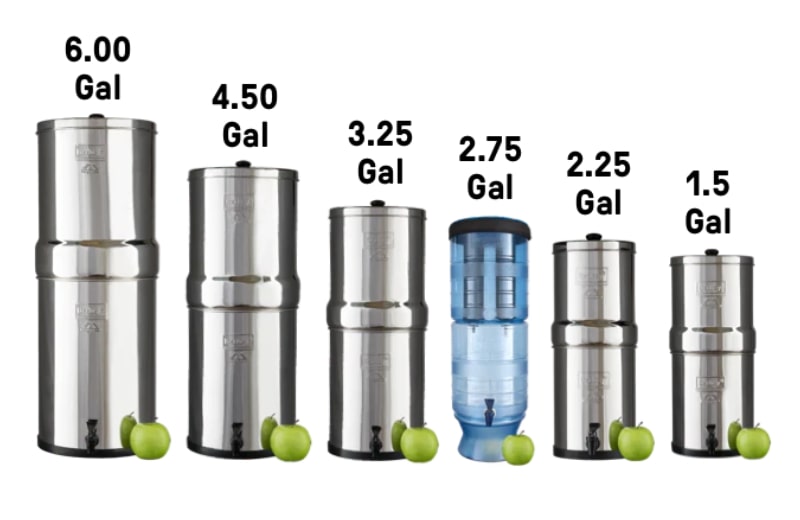
All Berkey systems have a stainless steel finish, with the exception of the Berkey Light, which is made from BPA-free plastic.
So, Berkey will appeal more if you like having the choice between multiple size offerings, but Rorra is one of the only brands that offers vessel finishes aside from silver.
Component Quality
Rorra and Berkey might look similar, but in terms of the quality of their components, Rorra is the standout system here.
Both units are made from stainless steel, but where they differ is the plastics used in their construction.
Rorra’s plastic use is limited to small silicone o-rings and the filter’s end caps and mesh core, which are made from FDA food-grade virgin polypropylene. In comparison, Big Berkey uses plastic in quite a lot of its design, including the fluoride filters and spigot.
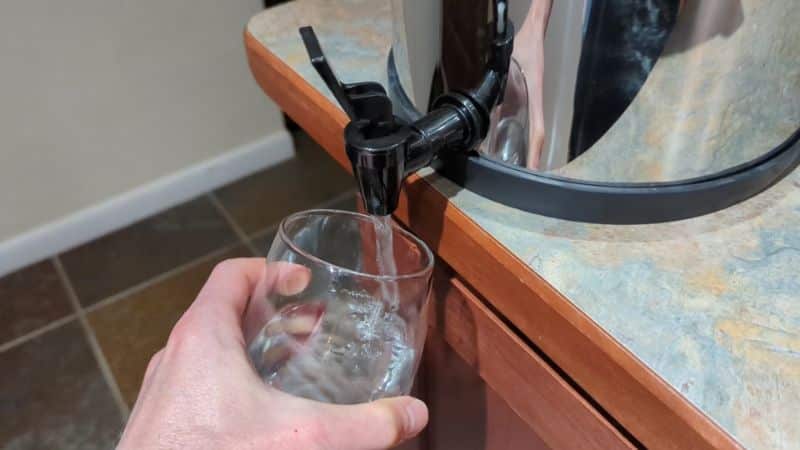
We also experienced specific issues relating to Berkey’s design, including leaks from the spigot and the potential for water to overflow between the top and bottom chambers. We didn’t have any of these problems with Rorra.
Filter Materials
As for the filter elements themselves, this is where we see some real differences between Rorra and Berkey.
Rorra sells just one filter:
- The Enfinity filter, which uses electrokinetic nanofiber media. There’s not a whole lot of information out there on how this media works, but from what we understand, it uses charged nanofibers to attract and immobilize contaminants through electrostatic and electrochemical interactions as water passes through.
Berkey sells two filters:
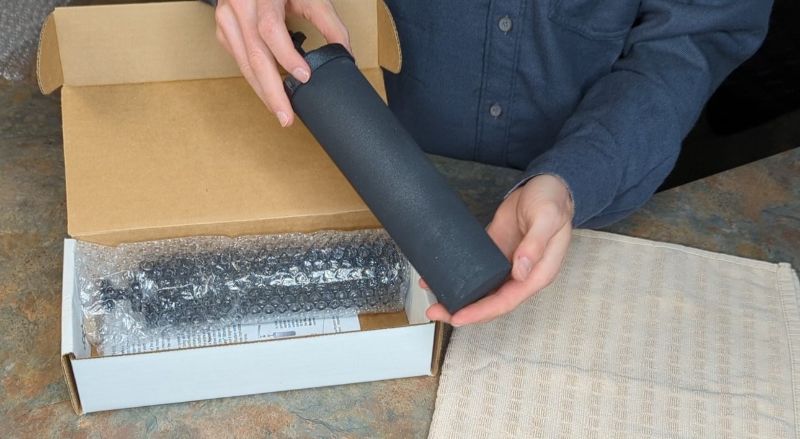
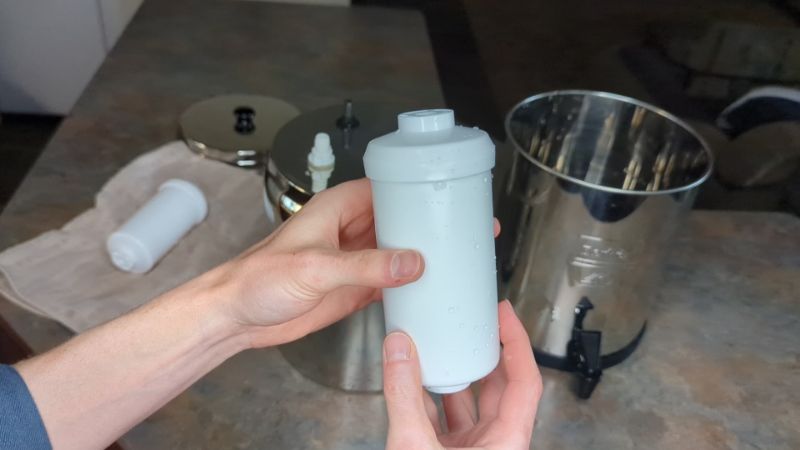
- The Black Berkey elements, made from activated carbon, an ion exchange resin, and four additional undisclosed media.
- The separate PF-2 fluoride filters, made from activated alumina.
You can use Berkey units with or without the fluoride filters. Rorra doesn’t currently sell a separate filter that removes fluoride.
Materials Safety Certification
Neither Rorra nor Berkey has obtained a materials safety certification, nor do any of these filters have a lead-free design certification.
These are optional certifications, like performance certifications, but they help to provide extra reassurance about design safety and durability. They’re especially valuable for a filter like Berkey, which uses a lot of plastic in its design.
⚙️ Setup: Rorra Won (8.50 vs 6.50)
Key Finding: Rorra was assembled and flushed in 25 minutes with no priming required, while Berkey took 1 hour 20 minutes, most of it spent on its fiddly filter priming process.
We compared the setup process for the Rorra and Berkey systems by evaluating their ease of assembly, especially when it comes to filter priming.
We’ve shared our setup times and scores in the table below.
| Product | Setup Score | Setup Time |
|---|---|---|
| Rorra | 8.50 | 25 minutes |
| Berkey | 6.50 | 1 hour 20 minutes |
Rorra is quick and easy to set up, taking us just under 25 minutes from start to finish. The other 20 minutes were spent flushing the filter, which simply involves filtering and discarding a batch of water.
In comparison, while Berkey is easy to assemble, it has an extremely frustrating filter priming process. If you don’t have a compatible faucet for the blue filter priming tool, you may have to use the included tan priming washers. Priming the filters took us over an hour and is unnecessarily fiddly.
🔧 Maintenance: Rorra Won (9.75 vs 8.50)
Key Finding: Rorra earned a perfect 10.00 servicing score with one tool-free filter swap and a built-in replacement indicator, while Berkey’s four filters all require re-priming at every replacement, offset by lower per-gallon costs ($0.13 vs $0.37).
We compared Rorra and Berkey in the maintenance category by analyzing their servicing requirements and ongoing filter costs.
See the scores we awarded to both systems in the next table.
| Product | Maintenance Score | Servicing Requirements | Costs |
|---|---|---|---|
| Rorra | 9.75 | Exceptional | $0.37/gal |
| Berkey | 8.50 | Weak | $0.13/gal |
Servicing Requirements
Rorra and Berkey share a handful of basic maintenance requirements, including the two key tasks:
- Replacing the filters
- Cleaning out the water chambers
For both units, replacing the filters is easy, involving unscrewing the old filters and screwing the replacement filters in their place.
Rorra has the easiest task as there’s only one filter to replace. Berkey has four separate filters — the two Black Berkey elements and two PF-2 fluoride filters — and all filters need to be primed first. Plus, because their projected lifespan is so long, there’s an extra maintenance task involved in scrubbing the filters with an abrasive scouring pad every 12 months.
Rorra claims a shorter projected filter lifespan of around 90 days, while Berkey’s main filters can reportedly last over 10 years, or 6,000 gallons per pair (a claim that seems extremely exaggerated in our opinion, and is not backed by official certification. So take this claim with a large grain of salt), and the PF-2 filters last around 6 months on average.
While Rorra’s filters don’t last as long, you do get a timer-based filter replacement indicator on the unit, which eliminates the need to make your own reminders. Helpfully, it also alerts you when the water volume has dropped below 72 ounces, so you know it’s time to refill the chamber. This is a unique feature that we don’t typically see on these kinds of gravity filters.
Maintenance Costs
Berkey is the most affordable unit to maintain, even with four lots of filters to replace, because of its long projected filter lifespan. That said, it’s worth noting that we calculated ongoing spend using Berkey’s likely exaggerated lifespan claims, so its actual ongoing spend could be higher.
Here’s how the maintenance costs compare for Rorra and Berkey:
| System | Filter Type(s) | Cost per Gallon |
|---|---|---|
| Rorra | 1 Enfinity filter | $0.37 |
| Berkey | Black Berkey elements | $0.034 |
| Berkey | Fluoride filters | $0.09 |
| Berkey Total (combined) | — | $0.13 |
🏢 Company: Berkey Won (9.10 vs 8.50)
Key Finding: BigBerkeyWaterFilters.com backs its systems with a lifetime warranty versus Rorra’s 12 months, though Berkey filters currently can’t ship to California or Iowa.
Finally, we compared Rorra and Berkey’s company policies, including their warranty, shipping, and returns offerings.
The table below shows the scores for each manufacturer across these subcategories.
| Product | Company Score | Warranty Length | Shipping | Returns |
|---|---|---|---|---|
| Rorra | 8.50 | 12 months | $16 shipping; free over an unspecified order minimum. | 30 days |
| Berkey | 9.10 | Lifetime | Free shipping on orders over $99 to the lower 48 states | 30 days |
Berkey is sold by different third-party sellers (we’re evaluating BigBerkeyWaterFilters.com here), while Rorra is sold directly from the manufacturer.
Warranty Length
All Rorra systems are backed by a 12-month warranty, while BigBerkeyWaterFilters.com offers a lifetime warranty for its systems. These warranties protect against manufacturing defects when the filters are used as the manufacturer intended.
BigBerkeyWaterFilters.com also warrants the Black Berkey elements for 2 years, while Rorra warrants the Enfinity filters for 90 days.
Shipping
Both brands received the same score of 9.00 for their shipping policies.
Standard shipping on the Rorra website costs $16.00. The company does offer free shipping over a certain threshold, which isn’t defined anywhere on the site, but the countertop system qualifies.
BigBerkeyWaterFilters.com offers free shipping to customers who live in one of the lower 48 states and spend more than $99 on their order.
Returns
According to Rorra’s returns policy, you can return your system within 30 days of your purchase if you’re not satisfied with it for any reason. There are a few stipulations, though: your item must be returned in its original packaging, you’ll need the receipt or proof of purchase, and you need to actually request the return first.
Any returns made after this window will be subject to a 10% restocking fee as well as the return shipping fee.
BigBerkeyWaterFilters.com offers a 30-day returns policy, allowing you to try the product and return it within this timeframe if you don’t enjoy it. All returns must be in their original packaging and free from damage. Plus, a 5% restocking fee applies.
🆚 Rorra or Berkey: We Recommend Rorra (8.33 vs 8.02)
For most folks, we think Rorra is the countertop gravity filter with the most appeal.
Here’s Why Rorra is Best:
- It has a design that uses very few plastic components, a simple setup process that doesn’t require filter priming, and a handy filter lifespan indicator.
- It performed well at reducing or removing the contaminants with health effects in our water, and its single filter is cheap and easy to service.
You Might Still Prefer Berkey If:
- You want more choice between different water holding capacities.
- You want to remove fluoride from your water (Berkey’s fluoride filters are problematic, but Rorra doesn’t offer a fluoride filter at all).
But Here’s Why Neither System is Perfect:
- Both are more expensive than the average stainless steel gravity filter.
- Both added trace contaminants into our water.
- Neither has any performance certifications.
- There are cheaper, certified alternatives available.
❔ Berkey vs Rorra FAQ
Q: Is Rorra better than Berkey?
A: Rorra scored 8.33/10 in our lab testing, ahead of the Big Berkey’s 8.02/10. Rorra won on filtration rate (3 GPH vs 0.75 GPH), design, setup, and maintenance, while Berkey won on contaminant reduction (8.25 vs 7.71) and company policies thanks to its lifetime warranty.
Q: Does Rorra remove fluoride?
A: No. Fluoride stayed at 1.4 PPM before and after filtering in our lab test of Rorra’s Enfinity filter, and Rorra does not currently sell a fluoride filter. Berkey’s optional PF-2 filters removed 100% of fluoride in our second lab test.
Q: Did Berkey add aluminum to our water?
A: Yes. Our first lab test detected 1.44 PPM of aluminum in Berkey’s filtered water, almost three times the Tap Score Health Guideline Level, which we attribute to activated alumina leaching from the PF-2 fluoride filters. After correctly priming a new set of filters, our second test detected just 0.069 PPM.
Q: Are Rorra and Berkey certified for contaminant reduction?
A: No. Neither system holds a performance certification from the NSF, WQA, or IAPMO, so both received the lowest certification score of 6.00 in our scoring system. Rorra has been NSF tested, but testing is not the same as certification.
Q: Which is cheaper, Rorra or Berkey?
A: Berkey. The 2.25-gallon Big Berkey cost $367 at the time of our review and costs around $0.13 per gallon to maintain, while the 2.5-gallon Rorra cost $549 and around $0.37 per gallon. Berkey’s per-gallon figure relies on lifespan claims we consider exaggerated, so its real running costs may be higher.
Q: Is Rorra the same as Berkey?
A: No. Rorra is a separate brand that uses a single Enfinity electrokinetic nanofiber filter, while Berkey systems use Black Berkey elements made from activated carbon and ion exchange media, plus optional activated alumina fluoride filters.