
What Happens When You Leave a Plastic Water Bottle in a Hot Car?

What a water bottle is made of and how it’s stored can affect the quality of the water inside. Water Filter Guru conducted an experiment to test how bottle materials and storage conditions affect water quality. We filled a single-use plastic water bottle and a reusable stainless steel water bottle with a plastic lid and silicone sealing ring with the same filtered water. Both bottles were placed in a car for a few days, during which it was driven and parked at different locations.
After the storage period, we collected water samples from each bottle and sent them to a certified laboratory for testing. The lab screened for more than 100 different chemicals. Here are the results and what you need to know.
📌 Key Takeaways
- After just 3 days in a hot car, water from a single-use plastic bottle contained detectable plastic-related chemicals and disinfection byproducts.
- Under the same conditions, no tested chemicals were detected in the reusable water bottle.
- DEHP (2.58 ppb) and total THMs (18.09 ppb) were detected in the single-use bottle, but not in the stainless steel bottle filled with the same filtered water.
- Chloroform accounts for the majority of THMs detected in the single-use bottle, with bromodichloromethane appearing at a much lower level.
- Chloroform, a probable carcinogen, was detected at 17 ppb in bottled water stored in a hot car.
A Snapshot of the Test Results
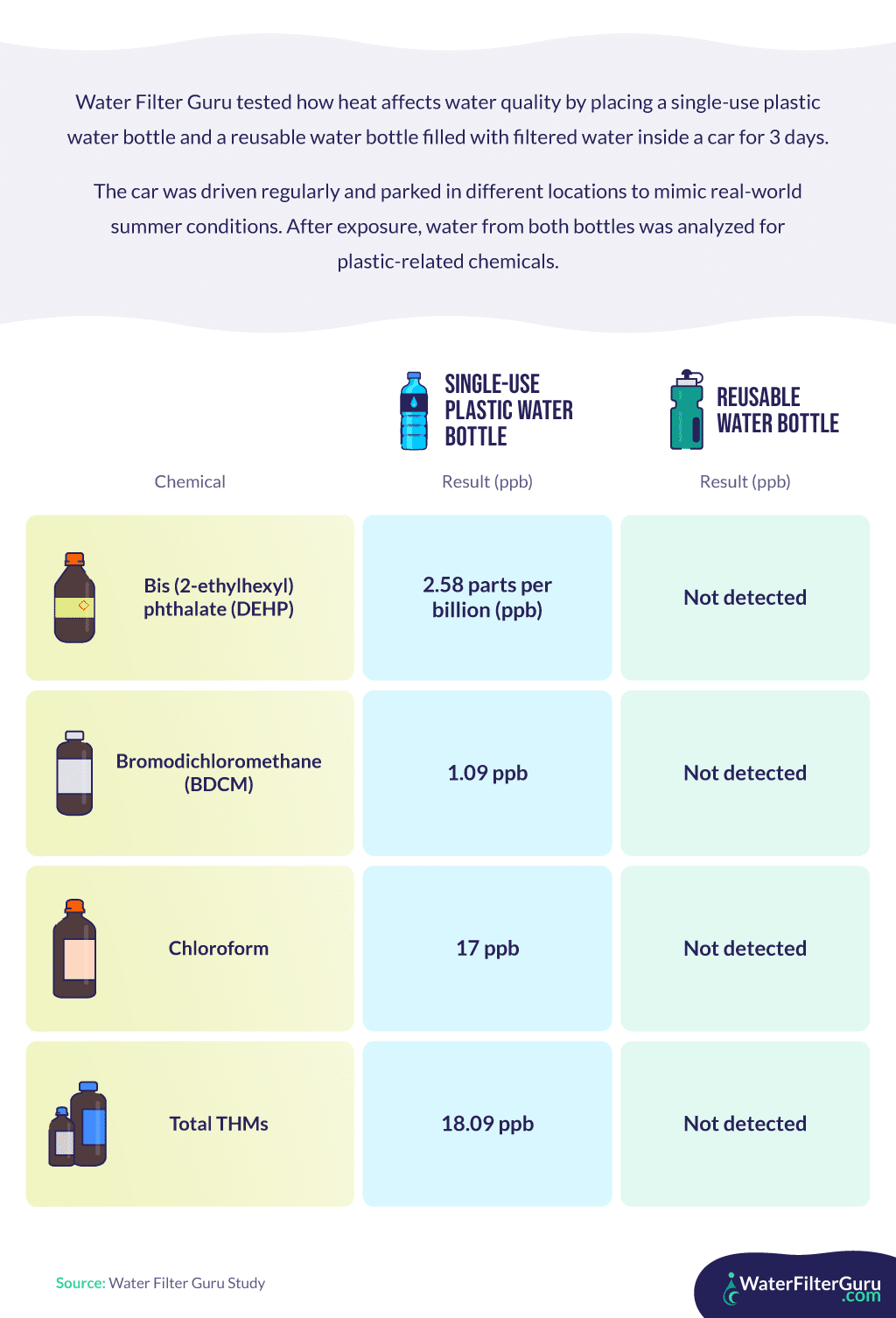
The Plastics Leachates Water Test used in this study screens for 126 chemicals that may migrate from plastic materials into water, including volatile organic compounds (VOCs) and semi-volatile organic compounds (SVOCs) commonly associated with plastics.
Water from the single-use plastic bottle showed detectable levels of several regulated chemicals after 3 days in the car. The highest detected compound was total trihalomethanes (THMs) at 18.09 ppb. It’s a group of disinfection byproducts monitored in drinking water for health considerations.
The detected chemicals can cause health issues after heavy or long-term exposure, as shown below.
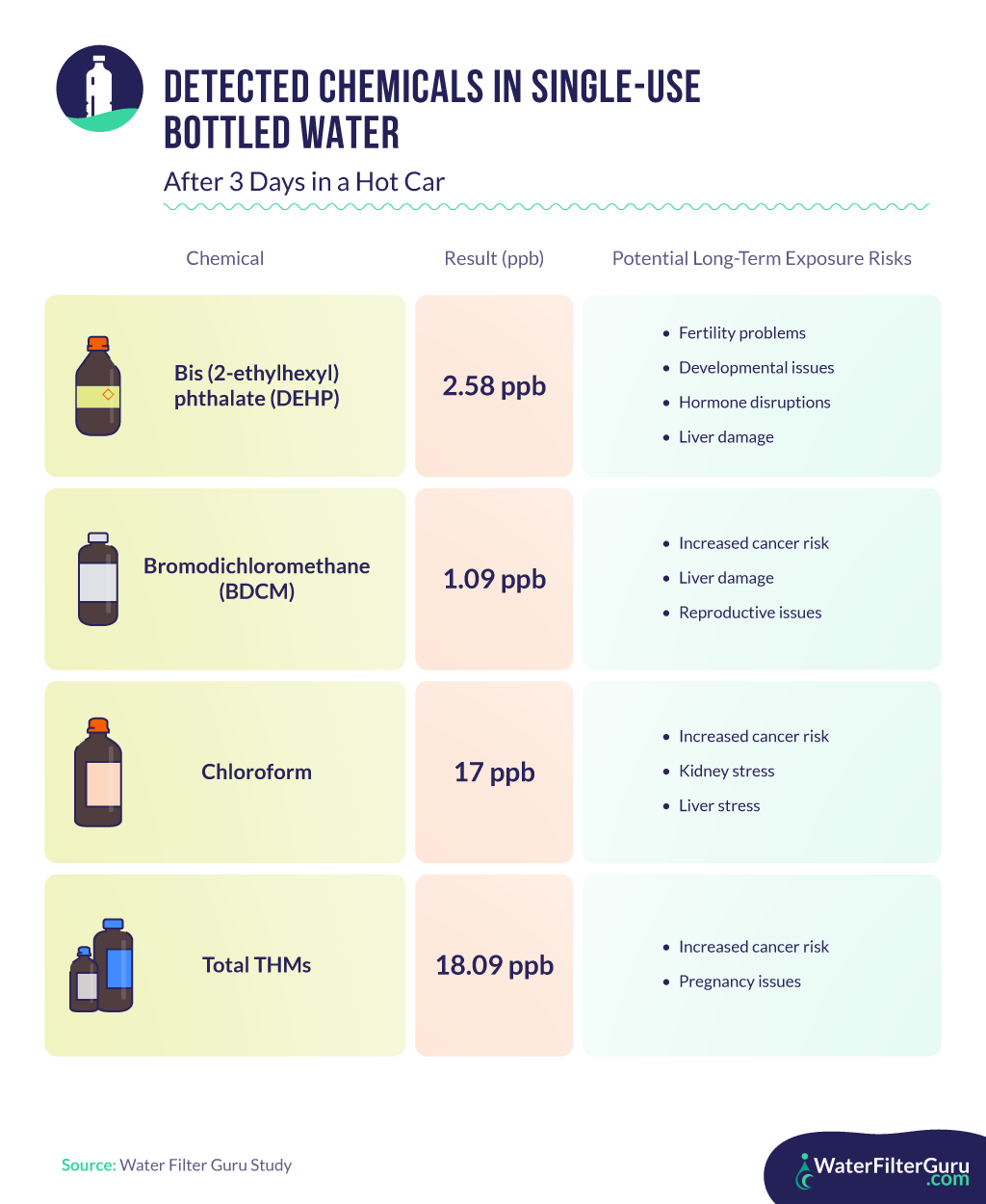
Chloroform accounted for most of the THMs detected, measuring 17 ppb, while bromodichloromethane was present at a lower level of 1.09 ppb. These compounds are disinfection byproducts typically formed when chlorine used in municipal water treatment reacts with organic matter and are regulated due to potential long-term exposure risks.
Importantly, neither compound is known to leach from plastic materials. In the context of this study, their presence does not indicate that they originated from the plastic bottle itself. Instead, their detection likely reflects trace-level post-fill contamination or environmental exposure during storage and handling after the water was added to the bottle.
The analysis also detected bis(2-ethylhexyl) phthalate (DEHP) at 2.58 ppb, a plasticizer commonly used to make plastics more flexible. Phthalates are not chemically bound to plastic, which allows them to migrate into water over time, especially under heat stress.
Putting the Numbers Into Perspective
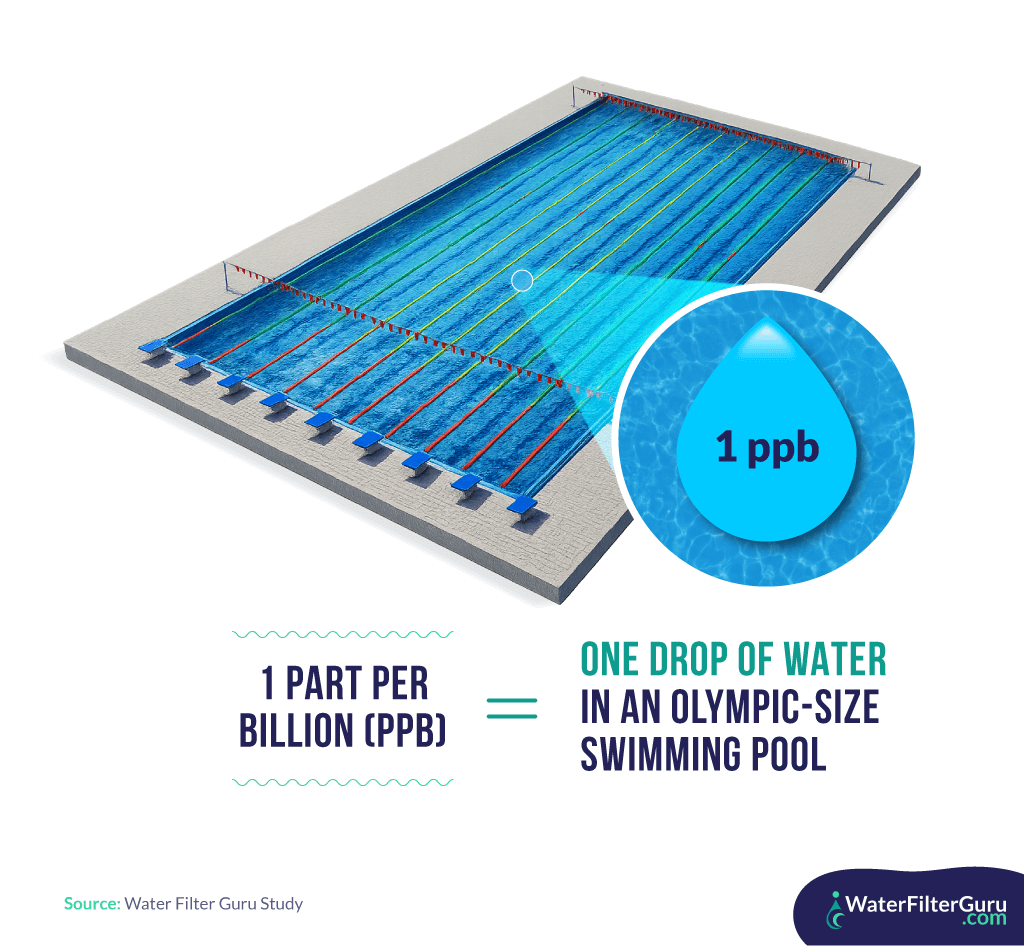
All detected concentrations in this experiment were measured in parts per billion, an extremely small unit of measurement. To put that scale into context, 1 ppb is roughly equivalent to a single drop of water in an Olympic-size swimming pool.
While these numbers are small, chemicals like these are monitored because of potential effects associated with repeated exposure over long periods of time.
DEHP
DEHP, or bis(2-ethylhexyl) phthalate, is part of a group of chemicals known as phthalates, which are commonly used to make plastics more flexible and durable. These compounds have historically been associated with plastic packaging and materials that come into contact with food and beverages.
Health benchmarks for DEHP are based on research linking long-term exposure to liver toxicity, endocrine effects, and increased cancer risk. The EPA classifies DEHP as a probable human carcinogen, which is why it is included in specialized plastics leachate testing.
Chloroform
Chloroform is the most frequently detected THM in treated water systems. It’s regulated due to associations with liver and kidney toxicity and increased cancer risk from long-term exposure. The EPA classifies it as a probable human carcinogen, and drinking water limits are designed to reduce lifetime exposure.
In this experiment, the bottles were filled with filtered water, which can still contain trace levels of disinfection byproducts depending on the source and filtration method. Its detection after storage does not indicate that chloroform leached from the plastic bottle.
Because a pre-storage baseline sample wasn’t analyzed, the study can’t determine when these compounds entered the water. However, since both bottles began with the same filtered water and were exposed to the same conditions, the absence of these compounds in the stainless steel bottle provides a useful comparison point for interpreting the results.
Bromodichloromethane
Bromodichloromethane (BDCM) is another trihalomethane formed during chlorination, particularly when bromide is present in source water. Bromide can enter water supplies through natural processes or industrial and agricultural activity.
BDCM is classified by the CDC as a probable human carcinogen, with health benchmarks based on liver toxicity and additional evidence of kidney, immune system, and developmental effects.
BDCM is not known to originate from plastic materials, and its presence in this study should not be interpreted as evidence of plastic leaching. Because a pre-storage baseline sample wasn’t analyzed, the study can’t determine when these compounds entered the water. But since both bottles began with the same filtered water and were exposed to the same conditions, the absence of these compounds in the stainless steel bottle provides a useful comparison point for interpreting the results.
What This Experiment Suggests About Plastic Bottles and Storage
Even though both bottles were kept in the same vehicle under the same conditions, no chemicals were detected in the reusable bottle. While this does not mean reusable bottles are universally contaminant-free, the results suggest that single-use plastic packaging and time spent in warm environments can influence drinking water quality.
Single-use plastic water bottles may sit in warm places such as cars, warehouses, or delivery trucks for extended periods. This experiment helps explain why handling and storage conditions are important when evaluating bottled water quality.
Should You Be Concerned?
All detected concentrations were measured in parts per billion, which represent very small amounts. Drinking water standards are designed with conservative safety margins, and short-term exposure at these levels is not typically considered an immediate health risk.
That said, low-level contaminants can come from multiple sources, including water treatment, plumbing, and packaging. While you can’t control every variable, there are a few easy ways to improve water quality and reduce long-term exposure without overthinking it.
How to Improve Your Water Quality at Home (Simple, Practical Steps)
If you want cleaner-tasting water and more peace of mind, these steps are the most effective:
1) Use a certified water filter
Different water filters reduce different contaminants, but many can help cut down on:
- Disinfection byproducts like trihalomethanes (THMs)
- Certain plastic-related chemicals
- Chlorine taste and odor (which also improves taste overall)
- Various other contaminants commonly found in tap water
Tip: Look for filters with independent certifications to NSF/ANSI standards, as performance can vary by model.
2) Choose the right reusable bottle
If you regularly reuse bottles, material matters, especially in heat:
- Stainless steel is the best all-around and heat stable.
- Glass is the most inert, but less travel-friendly.
- If you use plastic, choose high-quality BPA-free bottles and avoid repeated heat exposure.
3) Avoid heat exposure when you can
Leaving a bottle in a hot car can increase the chance of chemical migration from plastic and can also impact taste. If a bottle has been sitting in the heat, the simplest move is to dump, wash, and refill.
4) Store and clean bottles regularly
To keep water tasting fresh and reduce buildup:
- Keep bottles out of sunlight.
- Store water cool when possible.
- Wash lids and straws frequently (they hold odor and residue).
Bottom line: Don’t panic. If you rely on bottled water, avoid leaving single-use plastic bottles in hot environments, and consider using a reusable bottle and a certified water filter to reduce long-term exposure to unwanted chemicals.
Methodology
Water Filter Guru conducted an experiment using a single-use plastic water bottle and a reusable stainless steel water bottle with a plastic lid with a silicone sealing ring. Both bottles were filled with filtered water and stored in a moving and parked vehicle for 3 days to reflect common consumer storage conditions. After storage, water samples were collected and submitted to a certified laboratory using a Plastics Leachates Water Test, which analyzes 126 plastic-related analytes, including VOCs and SVOCs associated with plastics such as PVC, PEX, sealants, and plastic containers. Results were reported in parts per billion (ppb) using standardized analytical methods.
About Water Filter Guru
Water Filter Guru is the most comprehensive online resource for unbiased, in-depth information on residential water treatment. We help homeowners understand water quality concerns, compare filtration technologies, and make informed decisions without brand bias.
Fair Use Statement
The information in this article may be used for noncommercial purposes only. If shared or cited, proper attribution with a link back to WaterFilterGuru is required.
Disclaimer:
This study is exploratory and educational. Results reflect only the samples and conditions tested and should not be interpreted as universal outcomes. This content is not medical advice.